Bruno Panucci RMT
Deep Tissue & Therapeutic Massage in Brantford
Quick answer: Deep tissue massage is firm, slow, sustained pressure that works the inner layers of muscle and the connective tissue around them, where chronic tension tends to settle. In Brantford, Bruno Panucci RMT provides Registered Massage Therapy, deep tissue and therapeutic work, from his in-home practice in Brantford, from $115. You set the pressure, and a receipt for your insurance comes with every session.
Deep tissue massage is a focused, therapeutic technique that uses slow, firm, sustained pressure to reach the deeper layers of muscle and the fascia, the connective tissue, around them. It is the work most people are actually after when a lighter massage feels pleasant but does not seem to get the spot. In Brantford, that work is done by Bruno Panucci, a Registered Massage Therapist (RMT) registered with the College of Massage Therapists of Ontario, with 25 years of hands-on experience and training from the Alexandrian Institute for Massage Therapy.
Bruno Panucci RMT, 25 years of practice: “Deeper is not the same as harder. The goal is to work slowly into a tight muscle until it lets go, and to keep checking in so the pressure stays useful, not painful. A larger, stronger therapist can hold that pressure with control, and the control is the part that actually helps.”
Deep tissue work is one part of Registered Massage Therapy, where the pressure is a scale you choose. The soft, gentle end is lighter and more flowing; the deep end is slower and firmer, aimed at a specific area of chronic tension, and the deepest pressure is used only when you ask for it. The research is cautiously supportive rather than miraculous: a 2015 Cochrane review found that massage may help subacute and chronic non-specific low back pain, with the strongest results when it is paired with exercise. It is not a cure, and it works best as part of a plan.
6 min read
What is deep tissue massage, and how does the pressure scale work?
Deep tissue massage uses slow strokes and firm, sustained pressure to reach the deeper layers of muscle and fascia. Rather than gliding over the surface, the therapist works into a specific tight area and stays there, easing the tissue until it releases. The same massage therapy session can move along a pressure scale, from soft and rhythmic, aimed at general relaxation and circulation, through medium, to deep, with the deepest pressure used only on request. Most sessions move along that scale, firmer where it is needed and lighter elsewhere.
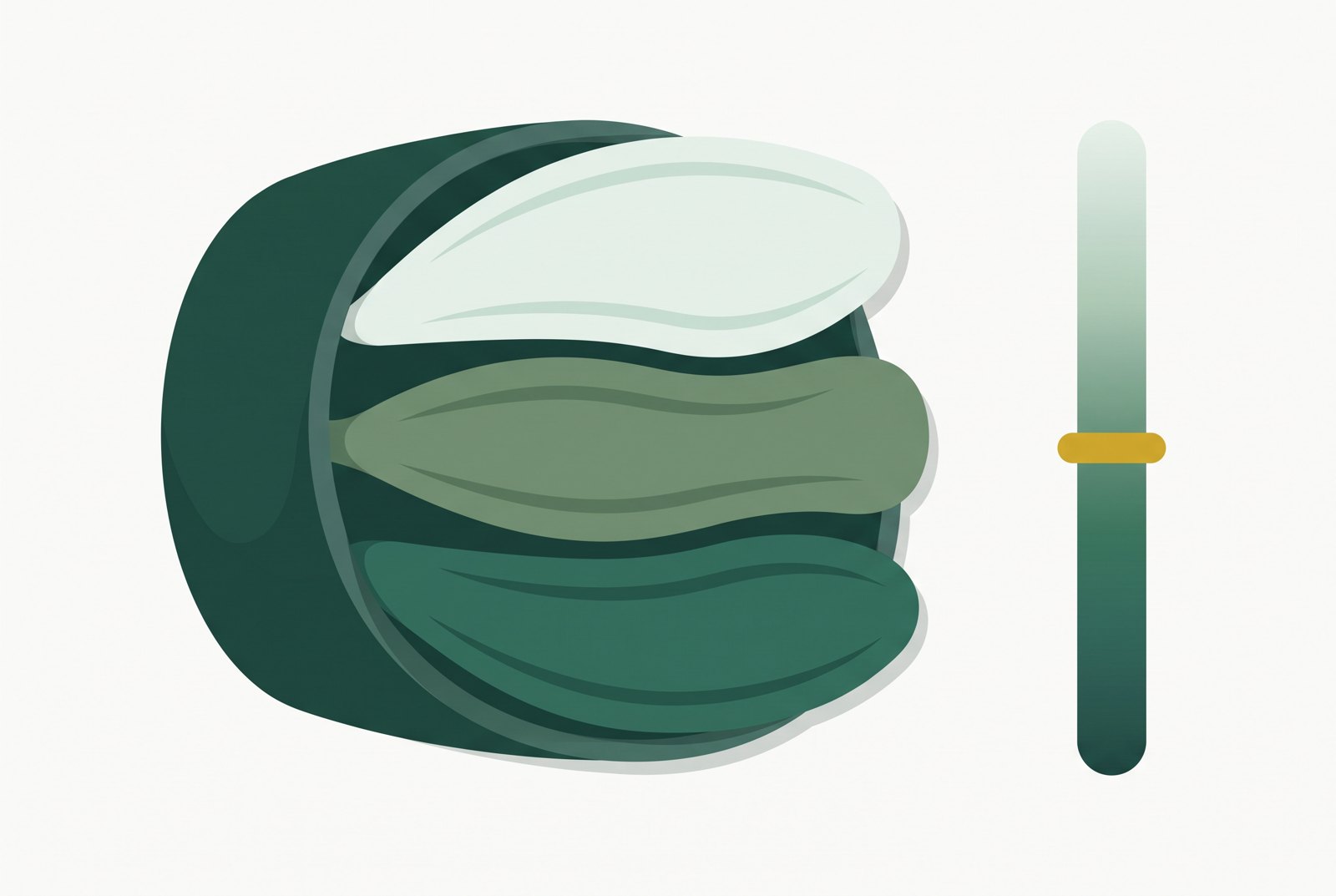
| Deep end | Soft end | |
|---|---|---|
| Pressure | Firm, slow, sustained (deepest on request) | Lighter, flowing |
| Goal | Release a specific area of chronic tension | General relaxation and circulation |
| Best for | Stubborn tightness, posture strain, recovery | Stress, unwinding, lighter days |
| How it feels | Intense at the spot, then easing | Gentle and soothing |
Does deep tissue massage help back pain?
It may help, as part of a plan. A 2015 Cochrane systematic review of massage for low back pain concluded that massage may benefit people with subacute and chronic non-specific low back pain, particularly when it is combined with exercise, while noting the evidence is of low to moderate quality. That is an honest “may help,” not a promise. Registered Massage Therapy can ease the muscular tension that often accompanies back pain and help you move more comfortably, but it is not a cure, and persistent or severe back pain should be assessed by your physician. Bruno works within RMT scope and will tell you plainly if he thinks something is outside it. If low back pain specifically brought you here, the dedicated guide to back massage for low back pain in Brantford goes deeper on patterns, evidence, and when to see a physician first. There is also a focused page on sciatica and the glute connection. Training and competition loads have their own guide: sports massage in Brantford.
Is deep tissue massage supposed to hurt?
Effective deep tissue work can feel intense at the spot being treated, a kind of firm pressure people often describe as a “good hurt” that eases as the muscle releases. It should not be sharp, bright pain, and it should never be more than you want. You set the pressure. You can ask Bruno to go firmer or lighter, change position, or stop completely, at any time and for any reason. As a lifelong weightlifter, Bruno has the strength to work genuinely deep when that is what helps, and the body mechanics to ease right off when it is not. Strength matters, but control is what keeps deep tissue safe and useful.
What deep tissue massage helps with
Deep tissue and therapeutic massage are commonly used for the kinds of muscular tension that build up over time. Within RMT scope, and with hedged, realistic expectations, that often includes:
- Lower back and hip tightness from desk days, driving, and heavy lifting.
- Neck and shoulder tension from screens, posture, and stress.
- Sports recovery. A 2017 systematic review and meta-analysis in Frontiers in Physiology found that massage can help reduce delayed onset muscle soreness (DOMS) and support muscle performance after strenuous exercise.
- General muscular tension and reduced range of motion that responds to focused, sustained pressure.
Massage is one tool among several. For ongoing or worsening symptoms, pair it with advice from your physician or another regulated health professional.
Who should be cautious with deep tissue massage
Deep tissue is not right for everyone, or for every day. Firm pressure may not be appropriate if you are on blood thinners, bruise easily, have a clotting disorder, a recent injury, surgery, or a flare-up, certain skin conditions, or are unwell with a fever or infection. During pregnancy, massage is often modified with different positioning and lighter pressure, and is offered with care. None of this rules massage out, it just means the right approach depends on you. Bruno screens at the first visit, and when something is outside RMT scope or better handled by your physician, he will say so.
What a deep tissue session with Bruno looks like
Sessions are one to one at his in-home practice in Brantford. In-home visits are also available if you prefer. Bruno follows the College of Massage Therapists of Ontario standards on draping, privacy, and consent: you are covered with a sheet and blanket throughout, only the area being treated is undraped, and consent is checked before and during treatment. He starts with a short intake, works at the pressure you choose, and checks in as he goes.
Sessions are $115 for 60 minutes. In-home visits within Brantford are $190, and out of town is more, quoted when you book. A receipt you can submit to most extended health plans comes with every session. For the home-visit option, see mobile and in-home massage in Brantford; for insurance, see direct billing and insurance; and for what to expect step by step, read your first visit.
Frequently asked questions
How is deep tissue massage with an RMT different from a deep massage at a spa?
“RMT” is a legally protected title in Ontario. Only people registered with the College of Massage Therapists of Ontario may use it, and a Registered Massage Therapist works to set standards on assessment, draping, consent, and record keeping, and provides a receipt eligible for most extended health plans.
How many sessions will I need?
It depends on you, what is going on, and how long it has been there. Some people come once for a specific tight spot; others find a regular visit helps them stay ahead of recurring tension. Bruno will give you an honest sense after the first session rather than selling a package.
Do you come to my home for deep tissue massage?
Yes. Bruno is home-based and mobile, and brings the table, fresh linens, and everything needed to set up a private treatment space at your place. In-home visits within Brantford are $190; out of town is more, quoted when you book.
Will my insurance cover it?
As a Registered Massage Therapist, Bruno provides receipts you can submit to most extended health benefit plans. Direct billing is available for most insurers. Check your own plan for massage therapy coverage and any limits.
Can deep tissue pressure go really firm?
As firm as you want, and no firmer. Bruno has the strength to work very deep when that is what helps, and he checks in throughout so it stays comfortable for you. You can adjust the pressure or stop at any time.
Book deep tissue massage in Brantford
Bruno Panucci RMT serves Brantford and Brant County from his in-home practice in Brantford. Sessions are $115 for 60 minutes; in-home visits within Brantford are $190 (out of town is more, quoted when you book). Receipts are provided for most extended health plans. Still comparing options? Here is how to vet a registered massage therapist near you before you book.
Text Bruno at 519-753-5544 (he prefers texts), call the same number, or book online.
A note on scope: This article is general information, not medical advice. Registered Massage Therapy can support comfort and function, but it is not a cure for any condition. If you have a health concern, speak with your physician or a Registered Massage Therapist about what is right for you. Bruno Panucci is a Registered Massage Therapist (RMT), and works within current RMT scope of practice.
Related reading
- mobile visits on request
- Direct billing and insurance for massage
- the first visit, step by step
- the Brantford practice overview
Sources
- Furlan AD, Giraldo M, Baskwill A, Irvin E, Imamura M. Massage for low-back pain. Cochrane Database of Systematic Reviews, 2015. cochranelibrary.com
- Guo J, Li L, Gong Y, et al. Massage Alleviates Delayed Onset Muscle Soreness after Strenuous Exercise: A Systematic Review and Meta-Analysis. Frontiers in Physiology, 2017. frontiersin.org
- College of Massage Therapists of Ontario, Standards of Practice.
- Massage Therapy Act, 1991, SO 1991, c 27. ontario.ca