Bruno Panucci RMT
Does Massage Therapy Actually Work? The Honest Evidence
Quick answer: Does massage therapy work? For pain, muscle tension, and short-term stress relief, the research is genuinely encouraging: controlled trials show massage therapy can ease pain and lower anxiety, though the effect is often modest and the evidence is stronger for some problems than others. It does not cure disease, flush toxins, or cause weight loss, and honest practice means saying so. Bruno Panucci RMT provides Registered Massage Therapy in Brantford at $115 for 60 minutes. This page is general information, not medical advice.
People ask does massage therapy work because they are being asked to pay for something whose benefits are easy to overstate. Massage therapy is the hands-on assessment and treatment of the body’s soft tissue and joints to ease pain and improve function, delivered by a registered practitioner. Bruno Panucci RMT has practised massage therapy for 25 years, is registered with the College of Massage Therapists of Ontario (CMTO), and serves Brantford and Brant County, including Paris, St. George, Mt. Pleasant, and Burford, from his in-home practice. The short version is that the evidence is real but uneven, and the deeper therapeutic work he offers is best understood as support, not a cure.
Bruno Panucci RMT, 25 years of practice: “I would rather undersell this than oversell it, because overselling is how the whole trade loses trust. Massage is very good at some things and unproven for others, and I know which is which after 25 years. If someone comes in expecting me to fix a disc or drain a disease out of them, I stop and set that straight before we start. What I can honestly promise is that most people leave in less pain and less wound-up than they arrived. That is worth a lot, and it is also not everything.”
In short: research suggests massage therapy can reduce pain and anxiety and bring short-term stress relief, with the strongest signals for muscle and soft-tissue pain. The effects are often modest, the quality of studies varies, and massage does not treat or cure any underlying disease. It is a supportive therapy, not a replacement for medical care.
6 min read
Does massage therapy work? What the research actually shows
Massage therapy has a real evidence base, and the fairest summary is “helpful for some things, uncertain for others.” A large systematic review of complementary therapies for neck and low-back pain by Furlan and colleagues (2012) found that hands-on treatments, including massage, reduced pain more than no treatment, placebo, or usual care immediately and at short-term follow-up, while noting that no single therapy proved superior to the others and that disability did not improve more than with a sham. In cancer-pain populations, a meta-analysis of randomized trials by Boyd and colleagues (2016) reached a weak recommendation in favour of massage therapy for easing pain, fatigue, and anxiety compared with active care, and found it safe, with adverse events infrequent. Those are honest, hedged findings, not miracle claims, and that is exactly why they hold up. Bruno Panucci RMT works from this same evidence-aware footing at his Brantford practice: massage is a genuine tool for pain and tension, used within Registered Massage Therapy scope, and never sold as a cure. Readers weighing the acupuncture comparison will find an even-handed Ontario map. From that the long history of massage to what the evidence says today, there is a dedicated page.
Where is the evidence for massage therapy strong?
The evidence for massage therapy is strongest for muscle pain, everyday tension, and short-term stress and anxiety. Furlan and colleagues (2012) found massage among the therapies that eased neck and low-back pain better than no treatment or usual care in the near term, which lines up with what most people feel: a body that hurts less and moves more easily right after a session. For stress, Rabito and colleagues (2013) noted that a single deep-tissue session produced measurable, immediate drops in blood pressure and heart rate, a plausible sign of the calming response people describe. And in cancer care, Boyd and colleagues (2016) reported real benefit for pain and anxiety alongside standard treatment. This is where a session tends to earn its keep, and where Bruno’s deep-tissue and therapeutic work in Brantford is aimed. The pressure is yours to choose, from soft through medium to deep, and you can adjust it, or stop, at any time.
Where is the evidence for massage therapy mixed or thin?
Massage therapy also has honest gaps, and the biggest one is long-lasting or structural change. A systematic review of physical and rehabilitation treatments for chronic non-specific low back pain by van Middelkoop and colleagues (2011) concluded there was insufficient data to draw firm conclusions about the clinical effect of massage for that stubborn, long-term back pain, even while exercise therapy showed clearer benefit. The same pattern appears elsewhere: Rabito and colleagues (2013) reported that while single-session drops in heart rate and cortisol were consistently seen, sustained reductions were not supported in the literature, so the calm often does not simply keep accumulating on its own. Furlan and colleagues (2012) likewise found no proof that massage outperformed other hands-on options, or that it reduced disability better than a sham. The honest reading is that massage tends to help you feel and function better now, that lasting change usually needs movement and strength work too, and that anyone claiming a single modality fixes chronic back pain has outrun the science. When that is the situation, Bruno will often say so, and a comparison of massage, physiotherapy, and chiropractic can help you pick the right door.
A note on scope: This page is general information, not medical advice. Registered Massage Therapy can support comfort and function, but it does not diagnose, treat, or cure any disease. For new, severe, or unexplained pain, numbness, weakness, or symptoms that follow an injury, see your physician first. Bruno Panucci is a Registered Massage Therapist (RMT), and works within current RMT scope of practice.
What massage therapy does not do, honestly
Massage therapy does not detox the body, flush toxins, cure illness, speed healing, or cause weight loss, and the honest evidence gives no support to those claims. Your liver and kidneys handle detoxification; a massage does not add to that, and there is no measured toxin that a session removes. The genuine, studied benefits are more grounded: less pain, less muscle tension, lower anxiety, and short-term stress relief, the outcomes Boyd and colleagues (2016) and Furlan and colleagues (2012) actually documented. Even the real cardiovascular effects that Rabito and colleagues (2013) recorded were immediate and short-lived, not a lasting cure for blood pressure. A registered massage therapist who promises to flush toxins or melt away disease is selling something the research does not back. Bruno Panucci RMT would rather name the real benefits, which are plenty, than borrow claims that do not survive a look at the evidence.
| Claim you may hear | What the research supports |
|---|---|
| Eases muscle pain and tension | Reasonable support, especially short-term (Furlan and colleagues, 2012) |
| Lowers stress and anxiety | Supported for short-term relief (Boyd and colleagues, 2016) |
| Cures chronic low back pain | Not supported; evidence is insufficient (van Middelkoop and colleagues, 2011) |
| Detoxes or flushes toxins | No evidence; the body detoxifies itself |
| Causes weight loss | No evidence |
Will massage therapy work for you specifically?
Whether massage therapy works for you depends on what you are asking it to do. If your problem is muscle tension, general soreness, a physical job or desk work catching up with you, or stress you carry in your neck and shoulders, massage is a well-matched, evidence-supported choice, and many people notice a difference from the first session. If your problem is a diagnosed condition, a recent injury, or long-term pain that needs rebuilding rather than easing, massage may still help you feel better, but it works best beside medical care and often beside exercise, not instead of them. How often you return matters too, and the guide to a sensible massage schedule is honest about frequency without pushing a package. At his Brantford in-home practice, Bruno Panucci RMT charges $115 for 60 minutes, a fair rate kept low by low overhead, with receipts most extended health plans accept and direct billing available for most insurers. The best way to know if it works for you is one honest session and a straight conversation about what you felt after.
Frequently asked questions
Is massage therapy scientifically proven to work?
Partly. Controlled trials show massage therapy can reduce pain and anxiety and provide short-term stress relief, with the strongest evidence for muscle and soft-tissue pain. The effects are often modest and the study quality varies, and it does not cure any underlying disease. It is a supportive therapy with a genuine, if uneven, evidence base.
Does massage really get rid of toxins?
No. There is no evidence that massage flushes toxins from the body, and your liver and kidneys already handle that. The real, studied benefits are less pain, less muscle tension, lower anxiety, and short-term stress relief. A therapist who promises a detox is claiming something the research does not support.
Can massage therapy cure my chronic back pain?
No honest therapist will promise a cure. A systematic review by van Middelkoop and colleagues found insufficient evidence that massage produces lasting change in chronic low back pain, though it can still ease how you feel. For long-term back pain, massage often works best alongside exercise and your physician’s guidance.
How soon will I know if massage therapy is working for me?
Usually within a session or two. If your issue is muscle tension, soreness, or stress, most people notice less pain and more ease shortly after treatment. Bruno Panucci RMT in Brantford would rather you judge it honestly by how you feel afterward than commit to a long package up front.
Book a massage with Bruno in Brantford
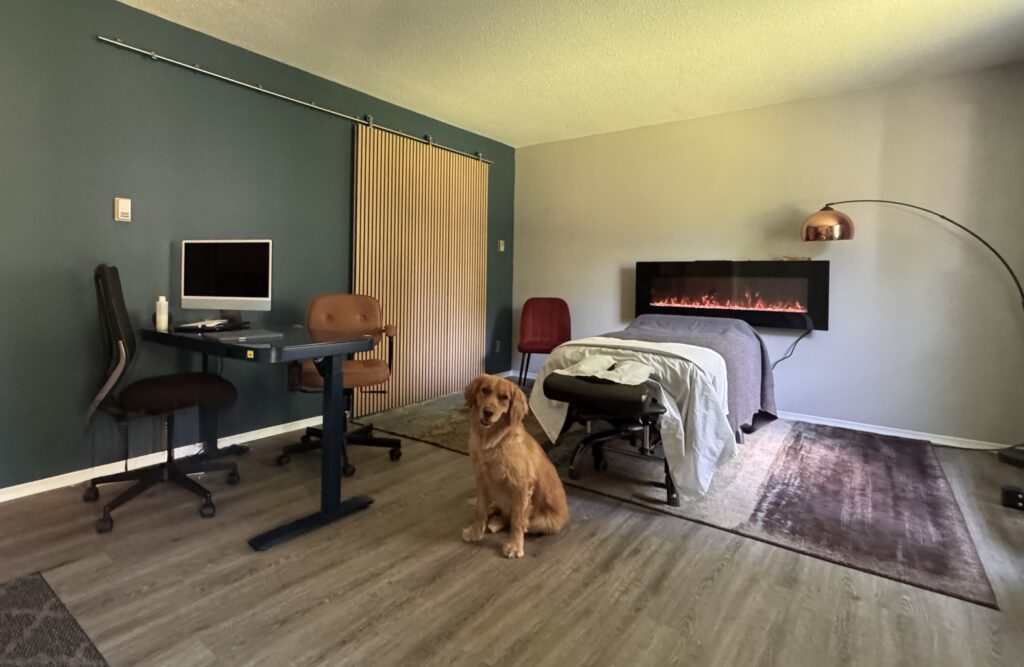
If the honest, evidence-supported benefits sound like what you need, Bruno Panucci RMT provides Registered Massage Therapy at his in-home practice in Brantford, serving Brant County including Paris, St. George, Mt. Pleasant, and Burford, with occasional mobile visits on request. Sessions are $115 for 60 minutes, receipts work with most extended health plans, and direct billing is available for most insurers. Two friendly, calm dogs share the treatment room, and can be kept out if you have allergies or a preference, just ask.
Text Bruno at 519-753-5544 (he prefers texts), call the same number, or book online. Need a time the calendar does not show, or a 90 minute or two hour session? Text him directly. He can often rearrange to fit you in, sometimes the same day.
A note on scope: This page is general information, not medical advice. It summarizes what the research does and does not support; it does not diagnose or treat any condition. Registered Massage Therapy can support comfort and function, but it is not a cure. For new, severe, or unexplained symptoms, numbness, weakness, or pain after an injury, speak with your physician first. Bruno Panucci is a Registered Massage Therapist (RMT), and works within current RMT scope of practice.
Related reading
- what deep-tissue therapeutic massage involves
- choosing between massage, physio, and chiro
- how often a massage actually makes sense
Sources
- Furlan AD, Yazdi F, Tsertsvadze A, et al. A systematic review and meta-analysis of efficacy, cost-effectiveness, and safety of selected complementary and alternative medicine for neck and low-back pain. Evidence-Based Complementary and Alternative Medicine, 2012; 2012: 953139. doi.org/10.1155/2012/953139
- Boyd C, Crawford C, Paat CF, et al. The Impact of Massage Therapy on Function in Pain Populations, A Systematic Review and Meta-Analysis of Randomized Controlled Trials: Part II, Cancer Pain Populations. Pain Medicine, 2016; 17(8): 1553-1568. doi.org/10.1093/pm/pnw100
- van Middelkoop M, Rubinstein SM, Kuijpers T, et al. A systematic review on the effectiveness of physical and rehabilitation interventions for chronic non-specific low back pain. European Spine Journal, 2011; 20(1): 19-39. doi.org/10.1007/s00586-010-1518-3
- Rabito MJ, Kaye AD. Complementary and alternative medicine and cardiovascular disease: an evidence-based review. Evidence-Based Complementary and Alternative Medicine, 2013; 2013: 672097. doi.org/10.1155/2013/672097
- College of Massage Therapists of Ontario, Standards of Practice.
- Government of Ontario. Massage Therapy Act, 1991, S.O. 1991, c. 27. ontario.ca/laws/statute/91m27