Bruno Panucci RMT
What Does RMT Mean? Registered Massage Therapist, Explained
Quick answer: RMT means Registered Massage Therapist, a title protected by law in Ontario under the Massage Therapy Act, 1991. Only someone who has completed a recognized massage therapy program, passed provincial examinations, and registered with the College of Massage Therapists of Ontario may use it. Bruno Panucci RMT holds the title and provides Registered Massage Therapy in Brantford at $115 per 60 minutes. This page is general information, not medical advice.
People type “what does RMT mean” after seeing the letters on a receipt, a benefits booklet, or a therapist’s name, and the answer matters more than most acronyms do. RMT stands for Registered Massage Therapist, a regulated health professional under Ontario’s Massage Therapy Act, 1991 and the Regulated Health Professions Act, 1991. Bruno Panucci RMT has practised for 25 years, is registered with the College of Massage Therapists of Ontario (CMTO), and provides Registered Massage Therapy from his in-home practice in Brantford, serving Brant County including Paris, St. George, Mt. Pleasant, and Burford. If you are weighing providers, how to choose a massage therapist near you walks through the practical questions.
Bruno Panucci RMT, 25 years of practice: “The three letters after my name are the shortest part of the story and the most important. They mean I went through a recognized program, passed the provincial exams, and answer to a College with real standards for consent, draping, and record keeping. Anyone can say they give a good massage. Not everyone is allowed to write RMT. After 25 years, I still think that difference is the first thing a new client should understand.”
In short: RMT means Registered Massage Therapist. In Ontario the title is protected under the Massage Therapy Act, 1991, so only graduates of a recognized program who pass provincial examinations and register with the College of Massage Therapists of Ontario can use it. RMT treatment produces receipts that extended health plans accept as Registered Massage Therapy.
6 min read
What does RMT stand for, exactly?
RMT stands for Registered Massage Therapist. In Ontario it is not a marketing phrase; it is a protected title under the Massage Therapy Act, 1991, one of the profession-specific laws that sit under the Regulated Health Professions Act, 1991. The Act defines massage therapy as the assessment of the soft tissue and joints of the body and the treatment and prevention of physical dysfunction and pain, and it reserves the titles “massage therapist” and “registered massage therapist” for members of the College of Massage Therapists of Ontario. Using the title without registration is an offence. So when you see RMT after a name, such as Bruno Panucci RMT in Brantford, the letters carry a legal guarantee: recognized training, passed provincial examinations, and current registration with the College. For how spa massage and regulated massage differ, there is an even-handed comparison. The endpoint of that story, how massage became a regulated profession, has its own explainer. The path behind the letters, how someone becomes an RMT, is laid out on its own page.
How does someone become an RMT in Ontario?
Becoming an RMT in Ontario runs through three gates. First, a recognized massage therapy program: a multi-year diploma covering anatomy, physiology, pathology, assessment, treatment techniques, and supervised clinical hours. Bruno Panucci RMT trained at the Alexandrian Institute for Massage Therapy. Second, provincial examinations that test both knowledge and hands-on clinical competence; Bruno passed Ontario’s provincial licensing examinations before he could practise. Third, registration with the College of Massage Therapists of Ontario, which brings ongoing obligations, not a one-time stamp: the College’s Standards of Practice govern consent, draping, privacy, record keeping, and professional boundaries for as long as a therapist practises. Those standards are why a first RMT visit starts with a health history and consent conversation rather than jumping straight to the table.
RMT vs masseuse vs massage therapist: what is the difference?
The difference between an RMT and a “masseuse” or unregistered practitioner is regulation, and in Ontario it is a bright line. An RMT is a regulated health professional, accountable to the College of Massage Therapists of Ontario and its complaints process, bound by written Standards of Practice, and able to issue receipts insurers accept. An unregistered practitioner may be skilled, but no college oversees their training, conduct, or standards, and in Ontario they cannot legally call themselves a massage therapist. The word “masseuse” itself has drifted; in professional settings it has largely been retired because it blurs exactly the line the law draws. RMTs are also one of three regulated hands-on professions people commonly compare; the honest map of massage therapy versus physiotherapy versus chiropractic covers when each fits.
| Aspect | Registered Massage Therapist (RMT) | Unregistered provider |
|---|---|---|
| Title | “Massage therapist” and “RMT” protected by the Massage Therapy Act, 1991 | Cannot legally use either title in Ontario |
| Training | Recognized diploma program plus provincial examinations | Varies; no required standard |
| Oversight | College of Massage Therapists of Ontario: Standards of Practice, complaints process | None |
| Consent and draping | Governed by written College standards | At the provider’s discretion |
| Insurance receipts | Official Registered Massage Therapy receipts most extended health plans accept | Generally not reimbursable |
Why does the RMT title matter when you book a massage?
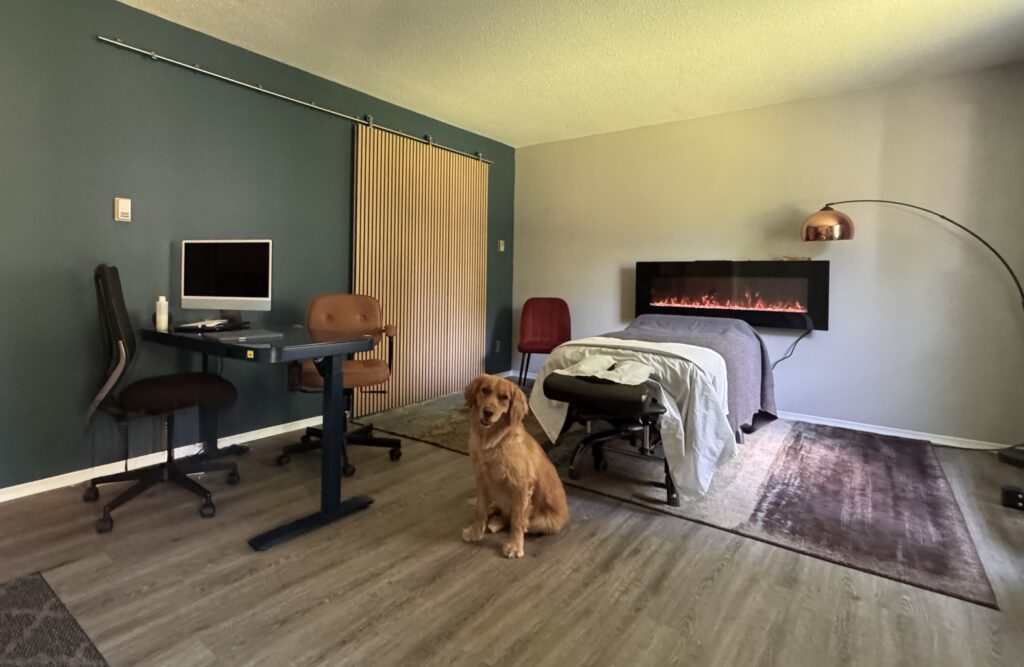
The RMT title matters because it converts trust from a promise into accountability. A Registered Massage Therapist answers to the College of Massage Therapists of Ontario and its complaints process, follows enforceable standards for consent, draping, and privacy, and works within a defined scope of practice. That framework does not depend on the setting. Bruno Panucci RMT works from a private treatment room at his in-home practice in Brantford, and the same College standards apply there as in any clinic: professional therapeutic massage only, draping to College of Massage Therapists of Ontario standards, consent before and during treatment, and the pressure you choose, from soft through medium to deep, with deeper work on request. An RMT will also be honest about limits. Registered Massage Therapy can support comfort and ease muscle tension, but it does not cure conditions, and a regulated professional says so plainly and sends new, severe, or unexplained symptoms to a physician first.
Does seeing an RMT matter for insurance coverage?
For insurance, the RMT designation is usually the whole ballgame. Extended health plans that cover massage almost always cover Registered Massage Therapy specifically, meaning treatment by an RMT, not massage in general. After a session, Bruno Panucci RMT provides an official Registered Massage Therapy receipt with everything your insurer needs, including his name and RMT designation. A session at his Brantford in-home practice is $115 for 60 minutes, a rate kept fair by low overhead, which stretches an annual massage benefit further. Direct billing is available for most insurers, so bring your plan information and ask. Plans differ in annual amounts and rules, and some want a physician’s note before reimbursing, so check your own benefits booklet.
Frequently asked questions
Is RMT the same as a massage therapist?
In Ontario, yes by law. The Massage Therapy Act, 1991 protects both “massage therapist” and “registered massage therapist” for members of the College of Massage Therapists of Ontario. Someone offering massage without registration cannot legally use either title.
How long does it take to become an RMT in Ontario?
Typically two to three years. Candidates complete a recognized massage therapy diploma program with supervised clinical hours, then pass provincial examinations before they can register with the College of Massage Therapists of Ontario and begin practising.
Does RMT mean the same thing in other provinces?
The letters usually stand for Registered Massage Therapist across Canada, but regulation varies by province. Ontario, British Columbia, and several others regulate the profession through a college; some provinces do not. In Ontario the title is protected under the Massage Therapy Act, 1991.
Is Bruno Panucci an RMT?
Yes. Bruno Panucci RMT is a Registered Massage Therapist with 25 years of experience, registered with the College of Massage Therapists of Ontario. He practises from an in-home practice in Brantford and provides official Registered Massage Therapy receipts most extended health plans accept.
Book a massage with an RMT in Brantford
Bruno Panucci RMT provides Registered Massage Therapy from his in-home practice in Brantford, serving Brant County including Paris, St. George, Mt. Pleasant, and Burford, with occasional mobile visits on request. Sessions are $115 for 60 minutes, receipts work with most extended health plans, and direct billing is available for most insurers.
Text Bruno at 519-753-5544 (he prefers texts), call the same number, or book online. Need a time the calendar does not show, or a 90 minute or two hour session? Text him directly. He can often rearrange to fit you in, sometimes the same day.
A note on scope: This page is general information, not medical advice. Registered Massage Therapy can support comfort and ease muscle tension, but it does not cure or treat any medical condition. For new, severe, or unexplained symptoms, speak with your physician first. Bruno Panucci is a Registered Massage Therapist (RMT), and works within current RMT scope of practice.
Related reading
- Finding the right massage therapist in Brantford
- Massage, physio, or chiro: which fits your problem
- What your first visit with Bruno looks like
- Massage therapy in Brantford with Bruno Panucci RMT
Sources
- Government of Ontario. Massage Therapy Act, 1991, S.O. 1991, c. 27. ontario.ca/laws/statute/91m27
- Government of Ontario. Regulated Health Professions Act, 1991, S.O. 1991, c. 18. ontario.ca/laws/statute/91r18
- College of Massage Therapists of Ontario, Standards of Practice.