Bruno Panucci RMT
Bursitis and Massage in Brantford: Around It, Not On It
Quick answer: Massage for bursitis in Brantford, with Bruno Panucci RMT, works around an irritated bursa, never on it. Direct pressure on an inflamed bursa is contraindicated, so a session eases the tight muscles and tendons that keep loading the spot, the glutes and hip for trochanteric bursitis, the shoulder girdle for subacromial irritation. Massage may ease the tension around a bursa; it does not treat or cure bursitis, and diagnosis belongs with your physician. This page is general information, not medical advice.
Bursitis is irritation or inflammation of a bursa, one of the small fluid-filled cushions that sit between bone and the tendons and muscles that slide over it, most familiar at the outside of the hip, the point of the shoulder, the elbow, and the knee. Bruno Panucci RMT, a Registered Massage Therapist with 25 years of hands-on experience, works with bursitis-adjacent hip and shoulder pain at his in-home practice in Brantford, serving Brant County including Paris, St. George, Mt. Pleasant, and Burford. His approach follows the honest clinical rule: the inflamed bursa itself is a no-pressure zone, and the useful work happens in the muscles around it, the same territory covered on the hip pain massage page. Bursitis is also easy to mistake for other problems. Radiology researchers note that bursitis can clinically be misdiagnosed as joint, tendon, or muscle pain, and that it often follows acute trauma, overuse, arthritis, or infection (Corvino and colleagues, 2026), which is exactly why the diagnosis belongs with your physician before massage becomes part of the plan.
Bruno Panucci RMT, 25 years of practice: “Bursitis is one of the conditions where the worst thing I could do is exactly what a client sometimes asks for: dig into the sore spot. That spot is a swollen cushion, and pressing it is like squeezing a blister. So I leave it alone and work everything around it, the glutes, the hip, the shoulder girdle, whatever has been hauling on that area and keeping it angry. Twenty-five years in, knowing where not to press is half the skill.”
In short: massage for bursitis is indirect by design. Because pressing on an inflamed bursa can make it worse, a Registered Massage Therapist works the tight muscles and tendons around it instead, aiming to reduce the pull and friction over the irritated cushion. It may ease surrounding tension and discomfort. It does not treat, cure, or speed the healing of bursitis.
6 min read
What is bursitis and why does massage avoid the sore spot?
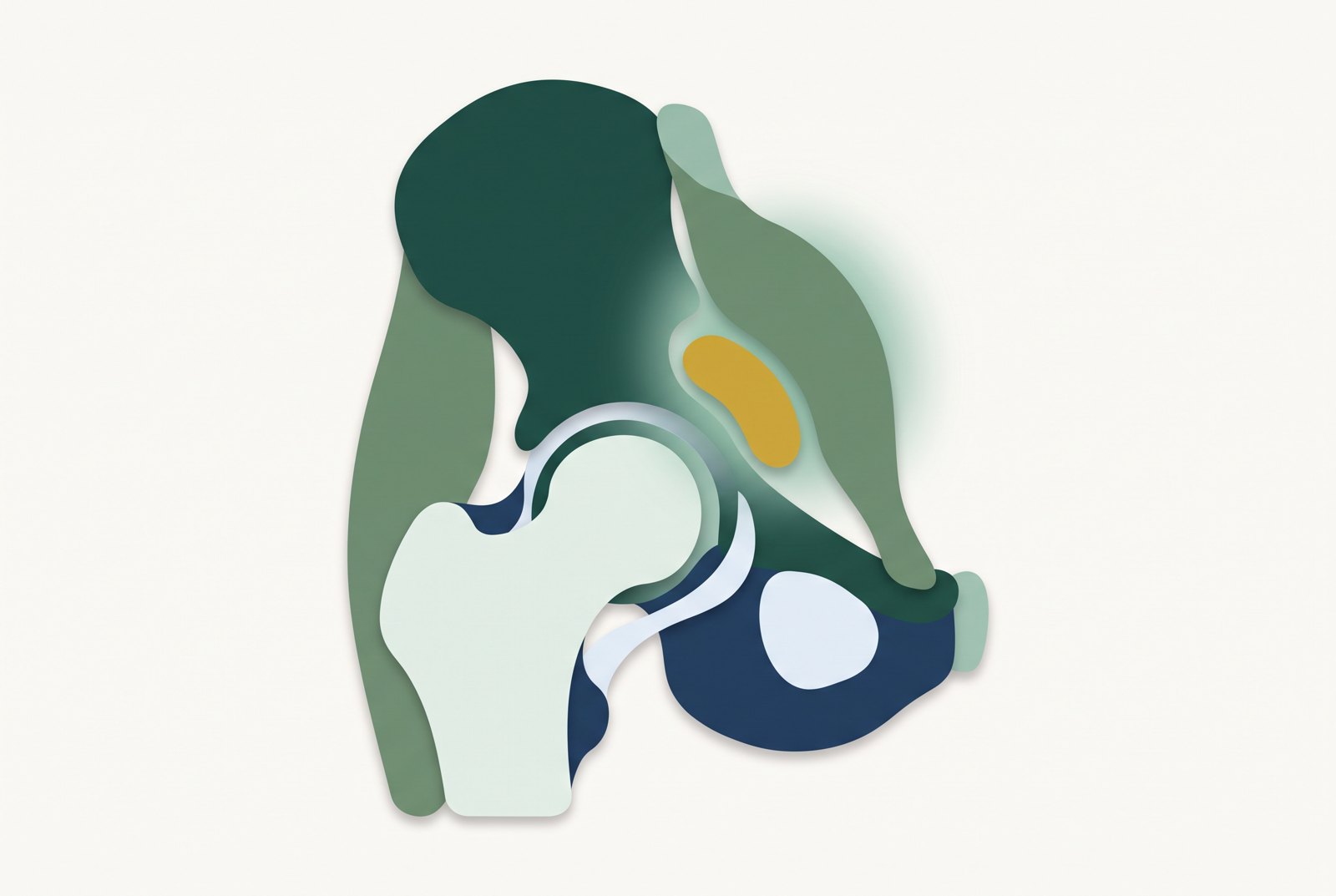
Bursitis is inflammation of a bursa, a small synovial sac that reduces friction where tendons and muscles glide over bone. When a bursa is irritated, usually by repetitive load, a direct blow, or an underlying condition, it swells and becomes tender, and pressure on it hurts. That is why the first rule of massage for bursitis is a rule of restraint: direct pressure on an inflamed bursa is contraindicated, so the sore spot itself is left alone. The confusion around bursitis is real, too. Corvino and colleagues (2026) describe how bursitis is often misdiagnosed as joint, tendon, or muscle pain, with a nonspecific presentation, and how imaging such as ultrasound plays an important role in sorting out what is actually going on. A Registered Massage Therapist cannot diagnose bursitis, and Bruno Panucci RMT will say so plainly. If your hip or shoulder pain has not been assessed, see your physician first, then bring the diagnosis to the table.
Can massage help bursitis?
Massage may help with the muscle tension that surrounds and aggravates a bursitis, and that is the honest limit of the claim. A bursa usually gets irritated because something keeps compressing or dragging across it: a tight iliotibial band and gluteal muscles over the hip, a bunched-up shoulder girdle over the subacromial space. Easing that surrounding tension may reduce the pull on the irritated area and make the whole region more comfortable. What massage does not do is reduce the inflammation inside the bursa, cure the condition, or speed its healing, and anyone who promises that is overselling. It is also worth knowing what the broader evidence says about related hip pain: a 2025 narrative review of greater trochanteric pain syndrome found that targeted physiotherapy and home exercise programs showed the best long-term outcomes, with no clear consensus on a single optimal treatment (Gill and colleagues, 2025). Massage sits alongside that kind of physician-led and exercise-based care as comfort support, the same supportive role it plays for shoulder pain more broadly, never as a replacement for it.
Hip bursitis: working the glutes, not the trochanter
Hip bursitis, most often felt at the greater trochanter on the outside of the hip, is actually one member of a family of lateral hip problems. Gill and colleagues (2025) describe greater trochanteric pain syndrome as a spectrum that includes gluteal tendinopathy, trochanteric bursitis, and snapping hip, which is part of why lateral hip pain deserves a proper medical assessment rather than a guess. In a massage session, the tender point over the trochanter is off limits. Bruno works the gluteal muscles, the deep hip rotators, the tensor fasciae latae and the tissue along the outer thigh, and the low back and hip flexors where they contribute, all of which influence how much load crosses that lateral hip. Side-lying positioning is adjusted so the sore side is never bearing pressure against the table. The aim is a hip that carries less baseline tension, which many people find makes day-to-day walking, stairs, and lying on that side more tolerable while the medical plan does its work.
Shoulder bursitis: working the girdle, not the point
Shoulder bursitis, typically involving the subacromial bursa under the bony point of the shoulder, follows the same around-not-on logic. The subacromial space is crowded: the bursa shares it with the rotator cuff tendons, and irritation in one often travels with irritation in the other. In a session, Bruno avoids compressing the painful point of the shoulder and instead works the muscles that set the shoulder’s position and load, the upper trapezius, the muscles around the shoulder blade, the pecs and lats that pull the shoulder forward and down, and the neck where guarding builds up. Because the cuff tendons are close neighbours of the bursa, this work overlaps heavily with how Bruno approaches the rotator cuff, and the same caution applies: massage supports the comfort of the region while your physician manages the diagnosis and the plan. If shoulder pain came on after a fall, wakes you at night, or comes with weakness, fever, or a hot swollen joint, that is a physician visit, not a massage appointment.
What a bursitis-aware session looks like in Brantford
A bursitis-aware massage session at Bruno’s Brantford in-home practice starts with a conversation: where the diagnosis came from, where it hurts, what makes it worse, and what your physician or physiotherapist has advised. You set the pressure, and you can adjust it, or stop, at any time; the scale runs from soft through medium to deep, with deep work on request only and never over or near the inflamed spot. Treatment happens in a private treatment room, draped to College of Massage Therapists of Ontario standards, with positioning built so the sore hip or shoulder is never trapped under body weight. Two friendly, calm dogs share the treatment room, and Bruno is happy to keep them out on request. A 60-minute session is $115, you receive an official Registered Massage Therapy receipt with everything your insurer needs, and direct billing is available for most insurers. Because the practice runs from Bruno’s own home, the lower overhead keeps the price fair, which matters when bursitis care runs across several weeks.
Frequently asked questions
Can massage get rid of bursitis?
No. Massage does not reduce the inflammation inside a bursa, cure bursitis, or speed its healing. What it may do is ease the tight muscles and tendons around the irritated bursa, which can reduce the pull and friction over the area and make the region more comfortable while your physician-led care does its work.
Will Bruno massage directly over the painful spot?
No. Direct pressure on an inflamed bursa is contraindicated, so the sore spot itself is a no-pressure zone. Bruno works the surrounding muscles instead, the glutes and hip for trochanteric bursitis and the shoulder girdle for subacromial irritation, and positions you so the tender side never bears weight against the table.
Do I need a diagnosis before booking a massage for bursitis?
You do not need a referral to book, but a physician’s assessment is strongly recommended first, because lateral hip and shoulder pain have several look-alike causes and bursitis is often misdiagnosed as joint, tendon, or muscle pain. Knowing what you are dealing with lets Bruno plan the session safely and tells him exactly which area to leave alone.
How much does a bursitis-focused massage cost in Brantford?
A 60-minute session at Bruno Panucci RMT’s in-home practice in Brantford is $115. You receive an official Registered Massage Therapy receipt with everything your insurer needs, so most extended health plans apply. For a 90-minute session or a time the online calendar does not show, text Bruno at 519-753-5544.
Book a bursitis-aware massage with Bruno in Brantford
Bruno Panucci RMT offers careful, around-not-on Registered Massage Therapy for people managing bursitis at his in-home practice in Brantford, serving Brant County including Paris, St. George, Mt. Pleasant, and Burford, with a limited number of mobile visits available on request. Sessions are $115 for 60 minutes, with the pressure you choose from soft through medium to deep.
Text Bruno at 519-753-5544 (he prefers texts), call the same number, or book online. If you need a time the calendar does not show, a shorter session, or a 90-minute session, text him directly. He can often rearrange to fit you in, sometimes the same day.
A note on scope: This page is general information, not medical advice. Bursitis is a medical condition, and its diagnosis and treatment belong with your physician; massage supports the comfort of the surrounding muscles and does not treat or cure bursitis. If the area is hot, red, and swollen, if you have a fever, or if pain followed a hard fall, see your physician promptly before booking massage. Bruno Panucci is a Registered Massage Therapist (RMT), and works within current RMT scope of practice.
Related reading
- when the whole hip is the problem
- easing a guarded, aching shoulder
- the cuff tendons next door to the bursa
- rates and session lengths
Sources
- Corvino A, Tagliati C, Ricci V, Corvino F, Tafuri D, Catalano O, Cocco G. Anatomy and Pathology of Anterior and Lateral Hip Compartments Bursae: An Ultrasound Structured Approach in Sports Medicine. Diagnostics, 2026. doi.org/10.3390/diagnostics16111731
- Gill JK, Neal-Smith G, Saed A, Burgan A, Fernquest S. Management of Greater Trochanteric Pain Syndrome: A Narrative Review. Cureus, 2025. doi.org/10.7759/cureus.85859
- College of Massage Therapists of Ontario, Standards of Practice.
- Government of Ontario. Massage Therapy Act, 1991, S.O. 1991, c. 27. ontario.ca/laws/statute/91m27