Bruno Panucci RMT
Using a Health Spending Account for Massage in Ontario
Quick answer: Yes, in almost every case you can use a Health Spending Account (HSA, also called a Health Care Spending Account or HCSA) toward massage therapy in Ontario, as long as a Registered Massage Therapist provided the treatment and the receipt shows the RMT’s name and RMT designation. Bruno Panucci RMT charges $115 for 60 minutes at his in-home practice in Brantford and gives every client a compliant RMT receipt to submit. This page is general information, not medical advice. Confirm your own plan rules with your administrator.
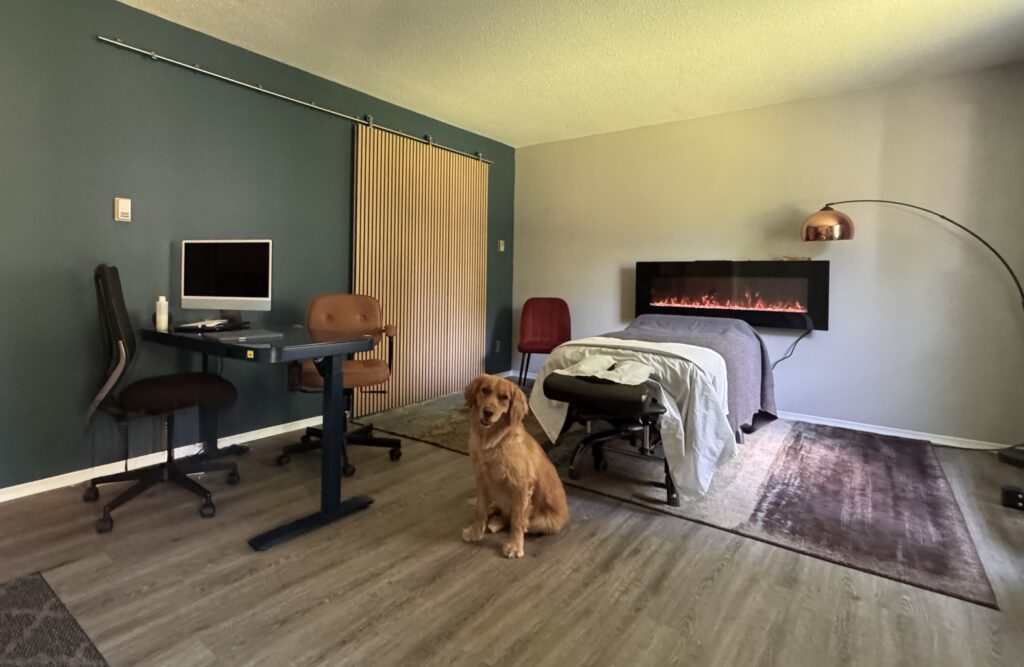
Bruno Panucci RMT has practised Registered Massage Therapy for 25 years, is registered with the College of Massage Therapists of Ontario (CMTO), and works from an in-home practice in Brantford, serving Brant County towns including Paris, St. George, Mt. Pleasant, and Burford. A Health Spending Account is an employer-funded pool of money you can spend on eligible health and dental costs that your regular benefits plan does not fully cover. Because Registered Massage Therapy is a regulated health profession in Ontario under the Massage Therapy Act, 1991, an RMT receipt is normally an eligible expense, and an HSA is one of the most flexible ways to pay for it. If you are still learning how coverage works, the overview of how massage benefits work in Ontario pairs well with this page.
Bruno Panucci RMT, 25 years of practice: “I keep it simple for clients: every session comes with a proper receipt that has my name and my RMT designation on it. That is the piece an HSA administrator is looking for. I cannot tell you what your specific plan allows, because plans differ and I do not see your booklet, but I have watched people quietly cover a lot of good care over the years with an HSA once they realized their massage money and their spending account were two separate buckets. Ask your administrator, keep your receipts, and you are usually fine.”
In short: a Health Spending Account is a personal pot of health dollars from your employer. Registered Massage Therapy in Ontario is an eligible health expense, so an RMT receipt can normally be claimed against an HSA. You pay the therapist, submit the receipt to your HSA administrator, and get reimbursed up to your available balance.
6 min read
What is a Health Spending Account, and can it pay for massage?
A Health Spending Account is an employer-funded account that reimburses you for eligible health and dental expenses, usually up to a fixed annual amount your employer sets aside. In Canada it follows the Canada Revenue Agency’s list of eligible medical expenses, which is broad and includes services from many regulated health professionals. Registered Massage Therapy delivered by an RMT in Ontario falls inside that category, so massage is almost always claimable through an HSA. The account is separate from the traditional insurance side of your plan, which is why so many people use it as a flexible backstop. Some employers offer only an HSA, some offer a traditional plan plus an HSA, and the rules for what each will pay come from your plan documents rather than from the therapist. Bruno Panucci RMT provides the compliant receipt; your administrator confirms your eligibility and balance.
| Feature | Traditional massage benefit | Health Spending Account (HSA/HCSA) |
|---|---|---|
| Where the money comes from | Insurer, as a set massage category | Employer-funded pool of health dollars |
| Physician note | Sometimes required before reimbursement | Usually not required for an eligible expense |
| Percentage paid | Often 80 to 100 percent of each visit | Typically 100 percent, up to your balance |
| Annual cap | A fixed massage dollar or visit limit | A fixed HSA balance shared across expenses |
| What the RMT provides | A compliant receipt | The same compliant receipt |
How do you claim massage therapy through an HSA?
Claiming massage therapy through a Health Spending Account is a short, predictable process. In most plans you pay Bruno Panucci RMT at the time of your visit, he issues a receipt showing his name and RMT designation, and you submit that receipt to your HSA administrator through their app, portal, or claim form. The administrator checks the expense against the eligible list and your remaining balance, then reimburses you, often by direct deposit within a few business days. Because an HSA reimburses you after the fact, it is different from direct billing, where a clinic bills the insurer up front. Bruno offers direct billing available for most insurers, and the guide to direct billing and insurance receipts in Brantford explains that side. For an HSA, the receipt-and-reimburse route is standard, and it is one reason keeping every RMT receipt matters.
What does a valid RMT receipt need to show?
A valid Registered Massage Therapy receipt needs a specific set of details, and this is the part clients most often ask about before their first HSA claim. Under CMTO standards, an RMT receipt records the therapist’s full name, the protected RMT title, the date and cost of the treatment, and confirmation that the service was Registered Massage Therapy. Every receipt Bruno Panucci RMT provides carries his name and his RMT designation, which is exactly what an HSA administrator verifies. That regulated status is why a receipt from a Registered Massage Therapist is claimable while a receipt from an unregulated wellness service is often not. You never need to chase Bruno for a compliant receipt; it is issued as part of the visit. Keep your receipts together in case your administrator asks to see them, and note that some plans have a submission deadline after the treatment date.
Can you use an HSA to top up your regular massage benefits?
Topping up is where a Health Spending Account genuinely earns its place. Many Ontario plans carry a traditional massage benefit that covers a set dollar amount or a fixed number of visits, and once you reach that cap the plan stops paying. An HSA can then cover the remaining cost of further Registered Massage Therapy, because the two are separate buckets of money rather than one shared limit. In practice, people use the traditional benefit first, then draw on the HSA for the rest of the year, which stretches how much care they can afford. At $115 for 60 minutes, Bruno Panucci RMT’s rate stays fair partly because an in-home practice carries lower overhead than a storefront clinic, so your combined benefits and HSA dollars go further. Confirm the order your own plan wants you to claim in, since some administrators coordinate the traditional benefit and the HSA automatically and others do not.
Is massage therapy worth spending HSA dollars on?
Whether massage therapy is worth your Health Spending Account dollars is a personal decision, but the research on general massage is reasonably encouraging for comfort and wellbeing. A 2026 systematic review and meta-analysis of manual therapy by Mo and colleagues (2026) reported that manual therapy, including massage, was associated with reductions in pain, anxiety, and better sleep scores in adults, while cautioning that it is best considered an adjunctive option within broader care. In a randomized controlled trial, Sert and colleagues (2026) found hand massage significantly reduced pain and anxiety and improved comfort in hospital patients. For people managing a serious illness, Uzunoglu and colleagues (2025) reported that massage therapy may provide short-term improvements in selected symptoms and quality of life for cancer patients, though the evidence there remains limited. Registered Massage Therapy can support comfort and ease tension; it does not cure conditions, detox the body, or flush out toxins, and any honest RMT will tell you the same. If your goal is relief from muscle tension, stress, or general soreness, spending HSA dollars on regular Registered Massage Therapy is a reasonable, eligible use of the account.
Frequently asked questions
Is massage therapy an eligible expense under a Health Spending Account in Ontario?
In almost all cases, yes. Registered Massage Therapy from an RMT is a recognized health expense in Ontario, so it normally qualifies under a Health Spending Account. The receipt must show the therapist’s name and RMT designation. Plans can differ, so confirm the eligible list with your HSA administrator.
Do I need a doctor’s note to claim massage through an HSA?
Usually not. A Health Spending Account generally reimburses eligible expenses without a physician’s note, unlike some traditional insurance plans that require one. This is a plan rule rather than a law, so check your own account requirements before you submit.
Can I use my HSA after my regular massage benefit runs out?
Yes, and that is a common use. Once your traditional massage benefit reaches its annual cap, an HSA can cover further Registered Massage Therapy because the two are separate pools of money. Bruno Panucci RMT provides a compliant receipt for each visit either way.
How do I get a receipt for my HSA claim from Bruno?
Every session at Bruno Panucci RMT’s Brantford in-home practice includes a receipt showing his name, his RMT designation, the date, and the cost. You submit that receipt to your HSA administrator to be reimbursed. You never need to request it separately; it is part of the visit.
Book a massage with Bruno in Brantford
Bruno Panucci RMT provides Registered Massage Therapy at his in-home practice in Brantford, serving Brant County including Paris, St. George, Mt. Pleasant, and Burford, with occasional mobile visits on request. Sessions are $115 for 60 minutes, and every visit comes with a receipt most extended health plans and Health Spending Accounts accept, showing his name and RMT designation. Direct billing is available for most insurers.
Text Bruno at 519-753-5544 (he prefers texts), call the same number, or book online. Need a time the calendar does not show, or a 90 minute or two hour session? Text him directly. He can often rearrange to fit you in, sometimes the same day.
A note on scope: This page is general information, not medical advice, and it is not tax or benefits advice. Registered Massage Therapy can support comfort and function, but it does not cure, treat, or detox any condition, and it does not flush toxins from the body. Coverage rules come from your plan and administrator, so confirm your own eligibility. For new, severe, or unexplained symptoms, speak with your physician first. Bruno Panucci is a Registered Massage Therapist (RMT), and works within current RMT scope of practice.
Related reading
- how to use your massage benefits in Ontario
- direct billing and RMT receipts in Brantford
- what to expect on your first visit
Sources
- Mo Y, Jiang Y, Li H, Liu J, Wu S, Wang L, Qi F, Zhang X. Effectiveness of manual therapy on physical and mental health promotion in adults: a systematic review and meta-analysis. Frontiers in Psychology, 2026. doi.org/10.3389/fpsyg.2026.1815296
- Uzunoglu A, Matta-Diaz P, Bustos-Gajardo V, et al. Efficacy of Massage Therapy for Symptom Management in Cancer Patients: A Systematic Review and Meta-Analysis. Healthcare, 2025. doi.org/10.3390/healthcare13243268
- Sert H, Gurcay B, Koc F, Eren MG, Acar BA, Toprak Y. The Effect of Hand Massage on Pain, Anxiety, and Comfort Levels of Intensive Care Patients: A Randomized Controlled Trial. Indian Journal of Critical Care Medicine, 2026; 30(2): 140-147. doi.org/10.5005/jp-journals-10071-25129
- College of Massage Therapists of Ontario, Standards of Practice.
- Government of Ontario. Massage Therapy Act, 1991, S.O. 1991, c. 27. ontario.ca/laws/statute/91m27