Bruno Panucci RMT
How Long Until a Massage Works? An Honest Answer
Quick answer: Most people feel some relief during and right after a single massage, looser muscles, less guarding, and calmer nerves, but that first easing is usually short-term. Durable change, the kind that holds for weeks, generally takes a few sessions spaced out, paired with movement and load changes between visits. Bruno Panucci RMT provides Registered Massage Therapy in Brantford at $115 for 60 minutes and sets honest expectations rather than promising a fix in one visit. This page is general information, not medical advice.
How long until a massage works depends on what you mean by “works.” Registered Massage Therapy often gives noticeable short-term relief in the session itself, and this fits what a recent controlled trial found: after a single manual therapy technique, participants showed measurable improvements in mobility right afterward, though the authors described these changes as modest and likely transient (Waesch and colleagues, 2026). Bruno Panucci RMT has practised massage therapy for 25 years, is registered with the College of Massage Therapists of Ontario (CMTO), and works from an in-home practice in Brantford, serving Brant County towns including Paris, St. George, Mt. Pleasant, and Burford. He would rather tell you the honest timeline than sell you a miracle. If you are weighing whether the work holds at all, the plain evidence on whether massage works is covered on its own page.
Bruno Panucci RMT, 25 years of practice: “People want a number, and the truth is most feel better on the table the first time. That is real, and it matters. What I am careful about is the word lasting. One session can quiet a tight neck for a few days. Holding that change usually takes two or three visits and a bit of homework, better sleep position, a stretch, a walk. If someone promises you a permanent fix in sixty minutes, they are guessing. I would rather under-promise and let your body prove me right.”
In short: a single massage usually eases tension and soreness for a short window, often hours to a few days. Change that sticks generally builds over a small series of sessions, supported by what you do between visits. Massage supports comfort and movement; it does not cure a condition or speed healing on its own.
6 min read
How long until a massage actually works?
How long until a massage works is best answered in two timelines, because they are different questions. The short timeline is immediate: many people notice muscles softening, breathing slowing, and guarded areas letting go within the session and for a stretch afterward. In one controlled trial, participants showed measurable improvements in range of motion immediately after a single manual therapy technique, though the authors noted these changes were modest and likely confined to the period right after the intervention (Waesch and colleagues, 2026). The longer timeline is about durability, and it moves slower. At Bruno Panucci RMT’s in-home practice in Brantford, a fair expectation for a tension pattern that has built up over months is relief in the first session and a more settled result over a small series. The pressure is yours throughout, from soft through medium to deep, and you can adjust it, or stop, at any time. Registered Massage Therapy is not an instant reset, and a therapist who says otherwise has stopped being straight with you.
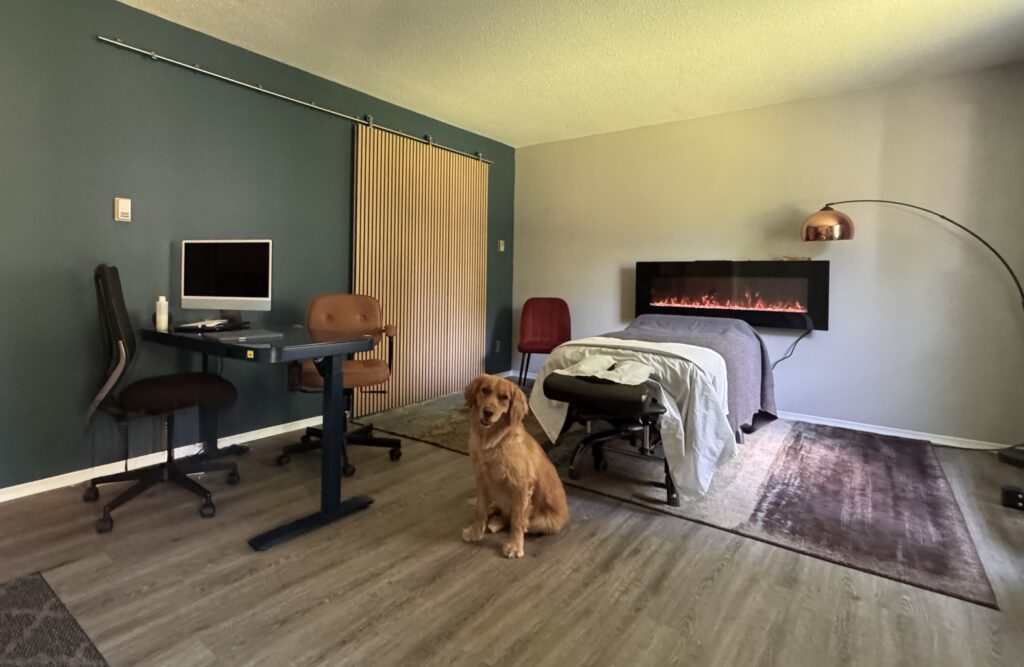
What can one massage session realistically do?
One massage session can realistically ease muscle tension, reduce the soreness of a hard-used body, calm a stressed nervous system, and improve how freely a stiff area moves, all for a short window afterward. That window is often hours to a few days, longer if the problem is fresh and simple, shorter if it has been building for a long time. For an acute knot from a bad sleep or a heavy week, a single visit can be most of the answer. For a chronic pattern, one session is a good start, not the finish. It is honest to say that massage in a single visit does not treat or cure any underlying condition, undo months of desk posture, or permanently change a muscle. What it does is give the body a genuine reprieve and a better starting point. Some people also feel tender the day after, which is normal and covered on the page about feeling sore after a massage; a lighter first session keeps that to pleasant tenderness rather than real soreness.
Why lasting relief usually takes a few sessions
Lasting relief usually takes a few sessions because a tension pattern that took months to form rarely unwinds in one hour. Each visit builds on the last: the muscle holds its looser length a little longer, guarding drops, and the body relearns a more comfortable baseline. Patient expectations play a real role here too. In a qualitative study of people receiving manual therapy, researchers observed that many patients expect treatment to eliminate pain entirely, yet complete elimination is difficult, and expectations are strongly shaped by earlier treatment experiences (Liu and colleagues, 2025). That is why Bruno frames a series honestly rather than promising a cure. How many sessions, and how far apart, depends on the problem, which is the subject of how often you should book a massage. His 25 years of clinical experience, much of it in medical offices treating a wide range of soft-tissue issues, often lets him shorten the number of treatments a person needs, not stretch them out.
| Situation | Relief in one session | What durable change usually needs |
|---|---|---|
| Acute knot or a stiff week | Often most of the answer | Sometimes a single visit is enough |
| Ongoing desk-work neck and shoulders | Short-term easing, hours to days | A few sessions plus posture and movement changes |
| Long-standing tension pattern | A helpful start, not a finish | A small series, spaced out, with homework between |
| Stress held in the body | Noticeable calm the same day | Regular maintenance suits many people |
What helps a massage work better between visits?
What helps a massage work better is what you do between visits, because the table is only part of the picture. Movement and load changes matter most: a gentle walk, a stretch for the tight area, a better sleep position, or an adjustment to the desk setup that keeps re-tightening your neck. Massage eases the tension, and those small changes stop it rebuilding as fast. Hydration and decent sleep help the body settle after a session. Choosing a sensible pressure helps too. You set the pressure, and you can adjust it, or stop, at any time; going as deep as possible does not make the work last longer, it just risks more soreness. Bruno’s honest advice, if it has been more than a few months since your last massage, is to take a little less pressure the first time, so you leave with pleasant tenderness rather than a sore next day. None of this is about detoxing or flushing anything from the body; massage does not remove toxins, cause weight loss, or speed healing, and any page that claims it does is overselling.
When should you see a physician instead of waiting?
You should see a physician rather than waiting on massage when the signs point beyond muscle and soft tissue. New, severe, or unexplained pain, numbness or weakness, pain after a real injury or fall, or symptoms that are steadily worsening are reasons to have a doctor assess you first. Massage is not a diagnostic tool, and Registered Massage Therapy does not treat or cure disease. If a problem is not improving at all across a reasonable series of sessions, that is also a signal to widen the picture, sometimes with a physician, sometimes with another regulated profession such as physiotherapy for a structured strengthening plan. Bruno Panucci RMT refers people out when massage is not the right fit, and has done so for 25 years. Getting the right door first is not a delay, it is the fastest honest route to feeling better.
Frequently asked questions
Should I feel better after one massage or does it take several?
Most people feel some relief during and right after one massage, but that easing is usually short-term. For a long-standing tension pattern, durable change generally takes a few sessions spaced out, supported by movement and load changes between visits.
How long does the relief from a single massage last?
It varies. For a fresh, simple problem, relief can last days and a single visit may be enough. For a chronic pattern built up over months, the window is often shorter, hours to a few days, which is why a small series tends to hold better.
Does deeper pressure make a massage work faster?
No. You set the pressure, from soft through medium to deep, and can adjust or stop at any time. Going as deep as possible does not make results last longer; it mainly risks more soreness afterward. A sensible pressure usually serves you better.
What if the massage does not seem to be working at all?
If there is no improvement across a reasonable series, or if you have new, severe, or unexplained symptoms, numbness, weakness, or pain after an injury, see your physician first. Massage does not diagnose or cure conditions, and Bruno refers people out when it is not the right fit.
Book a massage with Bruno in Brantford
If you want an honest read on your own timeline, Bruno Panucci RMT provides Registered Massage Therapy at his in-home practice in Brantford, serving Brant County including Paris, St. George, Mt. Pleasant, and Burford, with occasional mobile visits on request. Sessions are $115 for 60 minutes, you receive an official Registered Massage Therapy receipt with everything your insurer needs, and direct billing is available for most insurers.
Text Bruno at 519-753-5544 (he prefers texts), call the same number, or book online. Need a time the calendar does not show, or a 90 minute or two hour session? Text him directly. He can often rearrange to fit you in, sometimes the same day.
A note on scope: This page is general information, not medical advice. Registered Massage Therapy can support comfort and function, but it is not a cure for any condition and does not speed healing on its own. For new, severe, or unexplained symptoms, numbness, weakness, or pain after an injury, speak with your physician first. Bruno Panucci is a Registered Massage Therapist (RMT), and works within current RMT scope of practice.
Related reading
- how often booking actually makes sense
- the honest evidence on whether massage works
- why you might feel tender the next day
Sources
- Waesch S, Leitner J, Stelzer LM, Adamczyk WM, Luedtke K, Szikszay TM. Mechanistic Explanations of Manual Therapy Do Not Influence Outcomes in Healthy Individuals: A Randomized Controlled Trial. Health Science Reports, 2026. doi.org/10.1002/hsr2.72467
- Liu L, Zhang L, Li S, Cai M, Han S, Weng Z, Chen Q, Gao Y, Yang X, Zhang Y, Li D, Liu C, Sun Y, Wang X, Yu C. Experiences and perceptions of Chinese patients enrolled in a clinical trial assessing tuina and manual therapies for knee osteoarthritis: a nested qualitative study. BMC Complementary Medicine and Therapies, 2025. doi.org/10.1186/s12906-025-04926-7
- College of Massage Therapists of Ontario, Standards of Practice.
- Government of Ontario. Massage Therapy Act, 1991, S.O. 1991, c. 27. ontario.ca/laws/statute/91m27