Bruno Panucci RMT
How to Prepare for a Massage: The Day-Of Checklist
Quick answer: To prepare for a massage, eat a light meal one to two hours beforehand, drink water at your normal pace, and skip heavy lotion and strong fragrance. Ordinary same-day cleanliness is enough, and nobody needs to shave. Bruno Panucci RMT, a Registered Massage Therapist with 25 years of experience, provides massage therapy in Brantford at $115 for 60 minutes from his private in-home practice. You choose the pressure, from soft through medium to deep. This page is general information, not medical advice.
Preparing for a massage takes less effort than most people spend worrying about it. Bruno Panucci RMT is a Registered Massage Therapist with 25 years of hands-on experience, registered with the College of Massage Therapists of Ontario (CMTO), treating clients at his private in-home practice in Brantford and serving Brant County, including Paris, St. George, Mt. Pleasant, and Burford. After a quarter century of first appointments, he has heard every version of the same nervous question: what am I supposed to do before I get there? This page answers the day-of details, the food, the water, the shower worry, the caffeine, and what genuinely matters. For everything that happens once you arrive, from intake to draping, the first visit walkthrough covers the session itself.
Bruno Panucci RMT, 25 years of practice: “People walk in apologizing for things I have never once cared about. In 25 years, nobody has needed to shave for me, nobody has been too sweaty from a workday, and nobody has failed a massage. Eat something normal, drink your usual water, and come as you are. The only preparation that changes your session is telling me what is going on and how much pressure you want. The rest is my job, not yours.”
In short: eat a light meal one to two hours before your massage, drink water at your normal pace, and skip heavy lotions and strong fragrance. Ordinary same-day cleanliness is enough, shaving is unnecessary, and alcohol beforehand is a poor idea. Arrive in comfortable clothing, describe what hurts, and choose your pressure. Nothing else needs rehearsing.
6 min read
How do you prepare for a massage on the day of your appointment?
Preparing for a massage on the day of your appointment comes down to a short list, and most of it is about comfort rather than rules. A light meal an hour or two ahead, water at your normal pace, ordinary cleanliness, and comfortable clothes cover nearly everything. The rest of the popular advice, the pre-massage rituals, the double showers, the technique research, adds anxiety without adding anything to the treatment. Bruno Panucci RMT has watched Brantford clients over-prepare for 25 years, and his consistent message is that the table does the work, not the homework.
| Preparation item | Worth doing? | The honest reason |
|---|---|---|
| Light meal one to two hours before | Yes | Lying face down on a full stomach is uncomfortable, and arriving hungry works against relaxing |
| Water at your normal pace | Yes | Comfort only; there is no toxin flush for water to assist |
| Ordinary same-day cleanliness | Yes | A morning shower or a quick rinse after the gym is plenty |
| Shaving | No | Body hair makes no difference to hands-on treatment |
| Heavy lotion or strong fragrance | Skip it | Lotion interferes with the massage oil, and scent lingers in a private treatment room |
| Alcohol beforehand | Skip it | Alcohol dulls the pressure feedback that steers your session |
| Researching techniques | No | Plain description of the problem beats technical vocabulary |
The last row deserves a sentence, because over-preparation is real. You do not need to arrive knowing whether you want trigger point work or a named modality. In a randomised trial of 160 adults with chronic neck pain, a specialised manual therapy technique improved neck extension no better than general manual therapy (Gong and colleagues, 2025). Describe the problem in your own words and let the therapist choose the tools. Wear whatever feels comfortable, since clothing and undressing questions have their own honest page, and if you have not booked yet, sessions at Bruno’s Brantford practice are $115 for 60 minutes and can be booked online in a few minutes.
Should you eat before a massage?
Eating before a massage is fine, and a light meal one to two hours ahead is the comfortable middle ground. Much of a session happens face down, with pressure moving through the back and hips, and a large recent meal makes that position genuinely unpleasant. Arriving hungry has its own cost, since a growling stomach and dipping energy work against the relaxation you came for. Bruno Panucci RMT suggests treating it like any appointment where you will lie still for an hour: a normal breakfast or lunch at the normal time, or a small snack an hour before an evening session, is all the planning the meal question needs. If a health condition affects how or when you eat, follow your physician’s guidance first; a massage schedule bends around it easily.
Do you need to drink extra water before a massage?
Drinking extra water before a massage is one of the most repeated pieces of advice in the industry, and the honest answer is that normal hydration is enough. The popular version of the claim says massage releases toxins that water must flush out. That claim is a myth. Massage does not squeeze toxins out of muscle, and no amount of water changes what your liver and kidneys were already doing on their own. Registered Massage Therapy supports circulation and eases muscle tension; it is not a detox procedure, and Bruno will tell you so plainly if you ask. What water genuinely affects is comfort. Drink at your usual pace through the day, and go easy in the last half hour so a full bladder does not interrupt the one hour you set aside to relax. If you feel thirsty afterwards, drink then; no ritual is required on either side of the table.
Do you need to shower or shave before a massage?
Showering before a massage is the preparation people quietly stress about most, and the real standard is far lower than the worry suggests. Ordinary same-day cleanliness, a morning shower before work or a quick rinse after the gym, is entirely enough. Nobody needs to shave, and body hair makes no difference to hands-on treatment; in 25 years of practice Bruno has never expected otherwise. Two things are worth skipping, though. Heavy moisturizer sits between your skin and the massage oil that is part of the treatment itself; oil-based massage is established enough that researchers are formally trialling Tuina, a Chinese therapeutic massage, combined with medicated oil for low back pain (Yuan and colleagues, 2026). Strong perfume or cologne is the other, since scent lingers in a private treatment room long after a session ends. And a reassurance for the self-conscious: draping follows College of Massage Therapists of Ontario standards throughout, so you are covered at all times except the area being worked on.
Can you have caffeine or alcohol before a massage, and what about workouts?
Caffeine before a massage is fine in your normal amounts. A morning coffee will not undo an afternoon massage, and no rule says massage day is decaf day. The only honest nuance is that if deep relaxation is the goal, skipping the extra late-day cup can make it easier to settle on the table, and that is a preference, not a requirement. Alcohol is different: skip it. Alcohol dulls your sense of pressure, and your feedback is what steers the session, so save the glass of wine for another evening. A hard workout on massage day is a scheduling choice rather than a rule. Many people in Brantford book massage for the day after heavy training, when muscles have something to say, and others train light on massage day and enjoy the session more. If you are already very sore from a new program, tell Bruno when you arrive; gentler work that day is the smarter session.
How much pressure should you ask for, and what should you mention?
Pressure is the one piece of massage preparation genuinely worth a minute of thought, and the rule at Bruno Panucci RMT’s Brantford practice is simple: you set the pressure, and you can adjust it, or stop, at any time. The scale runs from soft through medium to deep, and the deepest work happens only on request, never as a default. If it has been months or years since your last massage, Bruno’s standing advice is to take a little less pressure the first time back. Like riding a bike after a long break, everything feels great during and surprisingly tender after; starting lighter means pleasant tenderness instead of real soreness, and the page on feeling sore after a massage explains that difference honestly. Gentle work is not lesser work, either: a 2025 review of a very gentle, focused Japanese manual technique found it produced muscle relaxation and pain relief comparable to conventional massage and stretching, typically without post-treatment soreness (Sakato and Amitani, 2025).
The other preparation that matters is your health history. Name your conditions, medications, injuries, and surgeries on the intake form, even the ones that seem unrelated to a sore back. Massage research is increasingly condition-specific; current trials are measuring massage’s effects on pain and joint loading in medial knee osteoarthritis, for example (Pan and colleagues, 2026), and what suits one body gets adapted for another. Two practical notes finish the list. Anyone under 18 needs a parent or guardian in the room for the entire session, so plan for that when booking for a teenager. And new, severe, or unexplained pain belongs with your physician before it belongs on a massage table.
Frequently asked questions
Should I mention allergies before my massage appointment?
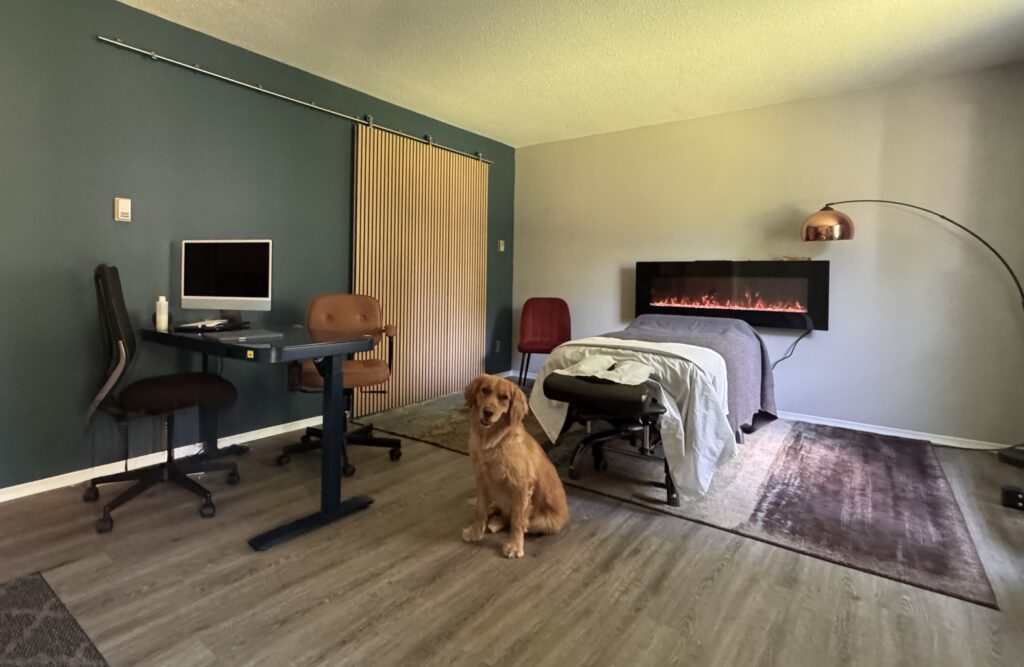
Yes, please do. Bruno Panucci RMT can adjust or swap the oil or lotion he uses, and scent-free sessions are no trouble. Two friendly, calm dogs share the treatment room at his Brantford practice, and if you have allergies or simply prefer a dog-free session, he will happily keep them out on request.
Is it okay to fall asleep during a massage?
Completely. Falling asleep is common, especially in relaxation-focused sessions, and it usually means the pressure and pace are right. Bruno keeps working and will rouse you gently when he needs you to turn over. There is no obligation to make conversation unless you feel like it.
Should I take a painkiller before a massage?
It is better not to take one just for the massage. Pain medication dulls your sense of pressure, and your feedback is what keeps the session at the right depth. Keep taking anything your physician has prescribed as usual, and list it on your health history so Bruno can plan around it.
What should I do if I am running late for my massage?
Text Bruno at 519-753-5544. He prefers texts and checks them between clients. He can often adjust rather than cancel, and a calm message beats a flustered arrival. Starting a few minutes late and relaxed works better than rushing across Brantford to be exactly on time.
Book a massage with Bruno in Brantford
Once the light meal is eaten and the normal water is drunk, the rest happens on the table. Bruno Panucci RMT provides Registered Massage Therapy at his in-home practice in Brantford, serving Brant County including Paris, St. George, Mt. Pleasant, and Burford, with occasional mobile visits on request. Sessions are $115 for 60 minutes, receipts work with most extended health plans, and direct billing is available for most insurers.
Text Bruno at 519-753-5544 (he prefers texts), call the same number, or book online. If the calendar shows nothing that fits, or you want a 90 minute or two hour session, text him directly. He can often rearrange to fit you in, sometimes the same day.
A note on scope: This page is general information, not medical advice. Preparing well can make a massage more comfortable, but Registered Massage Therapy supports comfort and eases muscle tension; it does not treat or cure any condition. If you have new, severe, or unexplained symptoms, see your physician before booking a massage. Bruno Panucci is a Registered Massage Therapist (RMT), and works within current RMT scope of practice.
Related reading
- Your first visit, from arrival to the table
- What to wear to a massage, answered honestly
- Why you can feel sore the day after a massage
- Massage therapy in Brantford with Bruno Panucci RMT
Sources
- Gong Z, Gao Y, Liu W, Li W, Wu X, Li J. Effectiveness of Jingjin Therapy for Non-Specific Chronic Neck Pain with Extension Dysfunction: A Randomised Controlled Trial. Journal of Pain Research, 2025. doi.org/10.2147/jpr.s515232
- Yuan M, Guo G, Wang S, Yao F, Wang G, Xu H. Clinical Efficacy Evaluation of Tuina Combined Medicated Oil in the Treatment of Nonspecific Low Back Pain: Protocol for a Randomized Controlled Trial. JMIR Research Protocols, 2026. doi.org/10.2196/81887
- Sakato T, Amitani H. The Muscle Relaxation Effects of Gentle, Focal Load (4.9-7.4 N) With a Narrow Contact Area: A Narrative Review of Kanshoho and Conventional Manual Therapies. Cureus, 2025. doi.org/10.7759/cureus.89646
- Pan F, Zhang M, Zhang G, Lu JH, Chen B, Wang G, Wang S, Zhan H. Effects of Massage on Pain, Muscle Co-Contraction, and Knee Loading in Medial Knee Osteoarthritis: A Randomized Controlled Trial Protocol. Journal of Pain Research, 2026. doi.org/10.2147/jpr.s584510
- College of Massage Therapists of Ontario, Standards of Practice.
- Government of Ontario. Massage Therapy Act, 1991, S.O. 1991, c. 27. ontario.ca/laws/statute/91m27