Bruno Panucci RMT
Whiplash Massage in Brantford: Easing a Strained Neck
Quick answer: Whiplash massage in Brantford, with Bruno Panucci RMT, is gentle Registered Massage Therapy that can ease the muscle tension and guarding a strained neck often carries once the acute phase settles and your doctor has ruled out anything serious. It may help you feel looser and more comfortable, and it works best alongside the neck movement your care team recommends. Massage supports symptoms; it does not treat or cure whiplash, and timing matters. This page is general information, not medical advice.
Whiplash is a neck injury from a sudden back-and-forth movement of the head, most often after a rear-end car collision, and it leaves the muscles of the neck and upper shoulders sore, stiff, and protective. Bruno Panucci RMT has practised as a Registered Massage Therapist in Brantford for 25 years, and he sees whiplash-related neck strain regularly across Brantford and Brant County towns like Paris, St. George, Mt. Pleasant, and Burford. Massage does not fix the underlying injury and it is not the first thing you should reach for. It is gentle symptom support that fits in later, once a physician has assessed you and the sharpest, most reactive days have passed. If tight neck and shoulder muscles are a big part of what you feel, that overlaps closely with the everyday neck and shoulder work he does most, applied more carefully.
Bruno Panucci RMT, 25 years of practice: “With whiplash, my first question is always the same: has a doctor seen you yet, and how long ago was the crash. If it is fresh, or you have not been checked, massage waits. When the time is right, I go lighter than people expect. A strained neck is already braced and guarding, and pushing into that just makes it brace harder. My job is to help it feel safe enough to let go, not to prove I can find the sore spot.”
In short: whiplash massage is gentle, later-stage Registered Massage Therapy that aims to ease muscle tension, guarding, and stress around a strained neck. It does not treat or cure the injury and should not be the first step. Timing matters, a physician should assess you first, and the deeper the pain or the more recent the crash, the more careful and conservative the work has to be.
6 min read
What is whiplash, and where does massage fit?
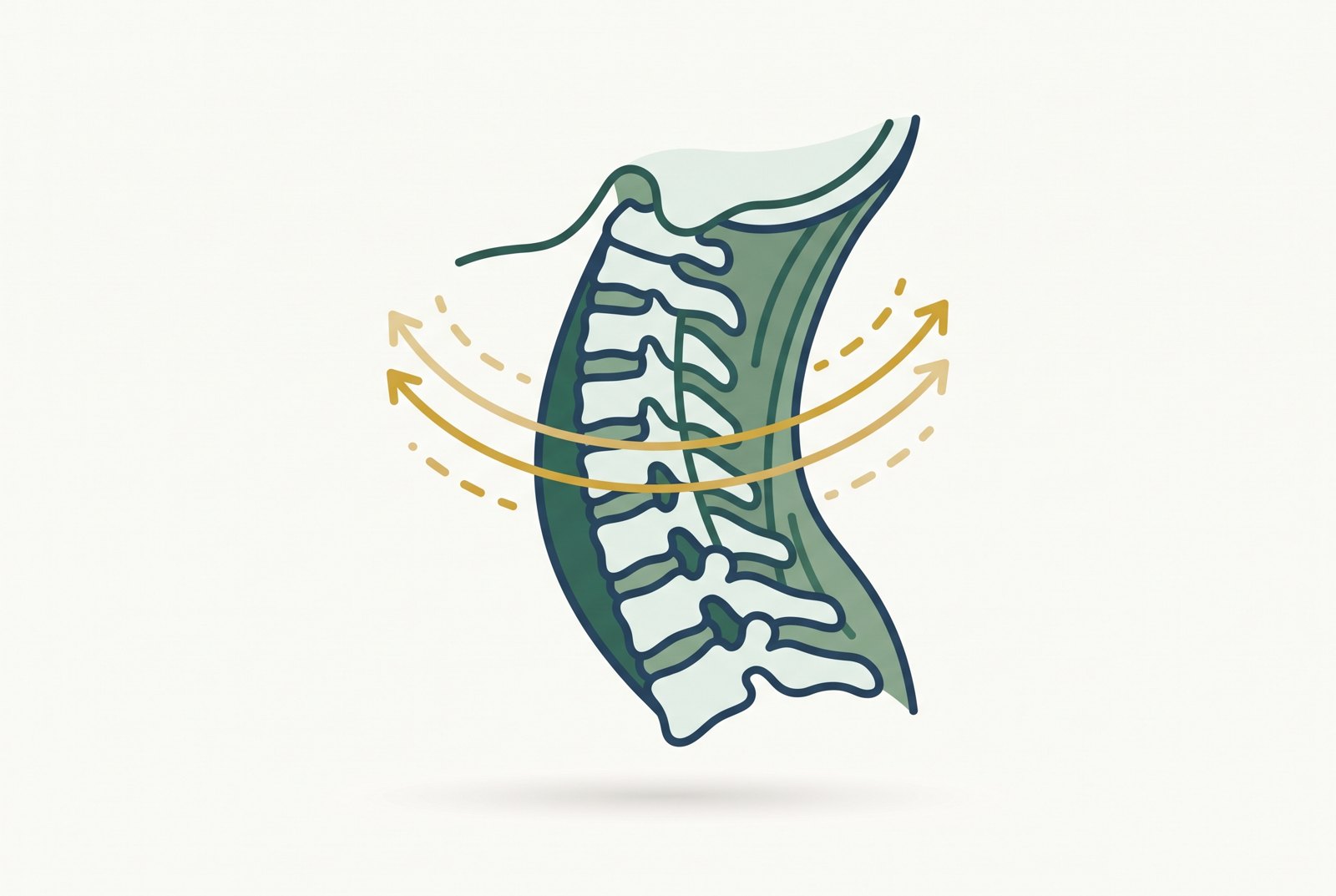
Whiplash is a soft-tissue neck injury caused by a rapid acceleration and then deceleration of the head, the kind of whip-like motion a rear-end collision produces. The muscles, tendons, and other soft tissues of the neck get overstretched, and the body responds by tightening and guarding to protect the area. Much of what a person feels in the days and weeks afterward is that muscular reaction: stiffness, aching, reduced movement, and tender bands in the neck and upper shoulders. The most common form of that muscle pain is myofascial pain, driven by trigger points, which are painful, sensitive nodules that sit on tight muscle bands (Fernandez-Navarro and colleagues, 2025). Massage works on that soft-tissue and muscular layer. It cannot mend a damaged ligament or reverse the injury itself, and it is not a substitute for medical assessment. Where it fits is later and gently: easing the tension and guarding that ride along with the injury, once a doctor has cleared you and the acute phase has calmed down.
When is it safe to get a massage after whiplash?
Timing is the single most important thing with whiplash, and the honest answer is: not right away, and not before a doctor has seen you. Whiplash is one of the most frequent reasons people end up in an emergency room after a car crash, and a proper medical assessment comes first to rule out anything that needs urgent care. In the earliest, most reactive days, hands-on massage over an inflamed, guarding neck can be too much and is usually not the right tool. Massage generally makes sense once the acute phase has settled, your physician is comfortable with you receiving soft-tissue therapy, and gentle movement is already part of your recovery. For persistent, longer-lasting neck problems after whiplash, exercise-based physiotherapy is a mainstay: a systematic review of thirteen trials with 2,427 participants examined neck-specific exercise for chronic whiplash-associated disorders and found that adding a structured behavioural component made no significant difference to pain and disability compared with the neck-specific exercise on its own (Correia and colleagues, 2025). Bruno Panucci RMT treats massage as a comfort-and-tension support that sits alongside that kind of active recovery, never as a replacement for it. If you are unsure whether you are ready, ask your doctor, and tell Bruno the date of the crash so he can pace the work accordingly.
Can massage help whiplash and neck strain?
Massage can help some people with whiplash-related neck strain feel looser and more comfortable, though it is important to be clear about what that help is and is not. The evidence base for whiplash recovery centres on movement and the way the nervous system handles pain, not on massage. Neck-specific exercise clearly helps: one study found that after a three-month neck-specific exercise program, people with chronic whiplash-associated disorders had significant improvements in neck disability, neck pain, and muscle fatigue, and it noted that the superficial trapezius, a large muscle across the top of the shoulders, is frequently painful in these injuries (Peterson and colleagues, 2026). How pain is understood matters too. A randomized clinical trial found that an approach combining pain neuroscience education, stress management, and graded exercise reduced neck pain-related disability in chronic whiplash more than usual care immediately after treatment and a year later (Malfliet and colleagues, 2025). Where massage earns its place is more modest: it can ease the muscle tension, trigger points, and stress that sit on top of all this, which is why the tension-headache work that often travels with a tight neck overlaps here. Massage supports comfort and eases symptoms. It does not treat or cure whiplash.
| What you may be looking for | The honest picture |
|---|---|
| Rule out serious injury | A physician’s job, not massage. Get assessed first, especially early on. |
| Recover neck movement and strength | Neck-specific exercise is the mainstay (Correia and colleagues, 2025; Peterson and colleagues, 2026). |
| Ease muscle tension, guarding, and trigger points | Where gentle massage can help, once you are cleared and the acute phase has settled. |
| Calm the stress and bracing that pain brings | Part of what a quiet, unhurried session can offer, alongside your care. |
| Cure the injury or speed the tissue’s healing | Not what massage does. It supports comfort; it does not mend the injury. |
What does a whiplash-aware session look like?
A whiplash-aware massage session is slower, lighter, and more communicative than a routine appointment, and it starts with one promise: you set the pressure, and you can adjust it, or stop, at any time. Bruno begins by asking when the collision happened, whether a doctor has assessed you, and what movements still hurt, and he keeps the work at the soft to medium end of the soft-through-medium-to-deep scale. Deep, forceful pressure is on request only and is rarely the right choice for a recently strained neck. Expect careful positioning with pillows and bolsters so your neck is supported, frequent check-ins rather than a silent hour, and a willingness to stay away from anything that provokes sharp pain, numbness, or tingling. A shorter session is a perfectly valid choice. Treatment happens in the private treatment room at his Brantford in-home practice, draped to College of Massage Therapists of Ontario standards. Two friendly, calm dogs share the treatment room and can be kept out on request. If you are new to the practice, what to expect on a first visit walks through intake, draping, and arrival before you book.
How massage fits with your medical care
Whiplash massage works as one supporting piece of a recovery that your physician leads. The diagnosis, imaging decisions, medication, and the overall plan belong with your doctor, and for anything beyond simple muscle strain, that medical guidance comes first. Registered Massage Therapy sits alongside that plan as comfort and tension support, in the same way that gentle, graded movement does. Bruno Panucci RMT is glad to work in step with what your care team recommends, and he will say plainly when something is outside what massage can help. Certain warning signs mean massage waits and you see a physician: severe or worsening pain, headache that will not settle, dizziness, numbness or tingling into the arms, or any trouble with vision, swallowing, or balance. A 60-minute session at his Brantford in-home practice is $115, receipts work with most extended health plans, and because the practice runs from his own home the lower overhead keeps the price fair, so your benefits stretch further across a series of gentle visits.
Frequently asked questions
How soon after a car accident can I get a massage for whiplash?
Not right away, and not before a doctor has assessed you. Whiplash is a common reason people visit an emergency room after a crash, so medical assessment comes first to rule out anything serious. Massage generally makes sense once the acute phase has settled and your physician is comfortable with soft-tissue therapy. Tell Bruno the date of the collision so he can pace the work.
Can massage cure whiplash?
No. Massage does not cure whiplash or mend the injured tissue, and it is not a substitute for medical care. What it can do is ease the muscle tension, trigger points, and stress that ride along with a strained neck once you are cleared to receive it. The evidence for actually recovering from whiplash centres on graded movement and neck-specific exercise, which massage supports rather than replaces.
Will the massage be deep and forceful on my strained neck?
No. For a whiplash-strained neck, Bruno works at the soft to medium end of the scale and keeps it there unless you ask for more. A recently injured neck is already guarding, and forceful pressure tends to make it brace harder. You set the pressure and can adjust it, or stop, at any time, and he stays away from anything that provokes sharp pain, numbness, or tingling.
Does massage replace physiotherapy or my doctor’s plan for whiplash?
No. Massage is symptom support, not a treatment for the injury, and it does not replace your doctor’s plan or exercise-based rehabilitation. Research on chronic whiplash points to neck-specific exercise as the mainstay of recovery. Massage sits alongside that care to ease tension and comfort, and Bruno is glad to work in step with your healthcare team.
Book a whiplash-aware massage with Bruno in Brantford
Bruno Panucci RMT offers gentle, careful Registered Massage Therapy for whiplash-related neck strain at his in-home practice in Brantford, serving Brant County including Paris, St. George, Mt. Pleasant, and Burford, with occasional mobile visits on request. Sessions are $115 for 60 minutes, and a shorter or lighter session is always a valid choice. Receipts are provided for most extended health plans, with direct billing available for most insurers.
Text Bruno at 519-753-5544 (he prefers texts), call the same number, or book online. If you need a time the calendar does not show, a shorter session, or a 90-minute session, text him directly. He can often rearrange to fit you in, sometimes the same day.
A note on scope: This page is general information, not medical advice. Whiplash is a real injury, and its diagnosis and management belong with your physician; massage is symptom support, not a treatment or a cure. See your physician before starting massage after a collision, and stop and seek medical care if you have severe or worsening pain, headache, dizziness, numbness or tingling in the arms, or any trouble with vision, swallowing, or balance. Bruno Panucci is a Registered Massage Therapist (RMT), and works within current RMT scope of practice.
Related reading
- Neck and shoulder massage in Brantford
- Massage for tension headaches in Brantford
- What to expect on your first visit
Sources
- Parera-Turull J, Garolera M, Navarro JB, Bech-Decareda DE, Gual-Beltran J, Toledo-Marhuenda JV, Poveda-Pagan EJ. The Effects of Cervical Manipulation Compared with a Conventional Physiotherapy Program for Patients with Acute Whiplash Injury: A Randomized Controlled Trial. Healthcare, 2025; 13(7): 710. doi.org/10.3390/healthcare13070710
- Peterson G, Andersson E, Jonsson M, Peolsson A. Effect of neck-specific exercises on trapezius muscle function in chronic whiplash-associated disorders. Scientific Reports, 2026. doi.org/10.1038/s41598-026-35963-y
- Malfliet A, Lenoir D, Murillo C, Huysmans E, Cagnie B, Meeus M, Willaert W, Ickmans K, Danneels L, Bontinck J, Nijs J, Coppieters I. Pain Science Education, Stress Management, and Cognition-Targeted Exercise Therapy in Chronic Whiplash Disorders: A Randomized Clinical Trial. JAMA Network Open, 2025. doi.org/10.1001/jamanetworkopen.2025.26674
- Correia L, Carvalho P, Amaral L, Esteves M, Vilarinho R, Cervaens M. The Effect of Neck-Specific Exercise with or Without a Behavioral Approach in Chronic Whiplash-Associated Disorders: A Systematic Review and Meta-Analysis. Muscles, 2025; 4(4): 49. doi.org/10.3390/muscles4040049
- Fernandez-Navarro R, Benito-de-Pedro M, Navarro Reyes FM, Moreno-Lopez J, Estebanez-Perez MJ, Pastora-Bernal JM. Intratissue percutaneous electrolysis and deep dry needling compared to a standard physiotherapy protocol in the treatment of whiplash syndrome: study protocol for a randomized controlled trial. Frontiers in Rehabilitation Sciences, 2025. doi.org/10.3389/fresc.2025.1670603
- College of Massage Therapists of Ontario, Standards of Practice.
- Government of Ontario. Massage Therapy Act, 1991, S.O. 1991, c. 27. ontario.ca/laws/statute/91m27