Bruno Panucci RMT
Massage for Hockey Players in Brantford: Groin and Hips
Quick answer: Massage for hockey players focuses on the regions the game loads hardest: the adductors and hip flexors that power the stride, the glutes that stabilize it, and the shoulders and neck that absorb contact. Bruno Panucci RMT treats hockey bodies at his Brantford in-home practice, $115 for 60 minutes, at the pressure you choose from soft through medium to deep. Massage supports recovery and eases tension; it does not treat injuries, and acute injuries belong with a physician first. This page is general information, not medical advice.
Massage for hockey players is Registered Massage Therapy aimed at the specific pattern skating builds in a body: adductors and hip flexors that fire on every stride, glutes and low back that hold the skating crouch, and shoulders that take the game’s contact and shooting load. Bruno Panucci RMT has worked on athletic bodies for 25 years, and in Brantford, Wayne Gretzky’s hometown, hockey bodies are never in short supply. Players come to his in-home practice from across Brant County, including Paris, St. George, Mt. Pleasant, and Burford, from beer leaguers to minor-hockey parents booking for their teenagers. The hip and groin end of the pattern is the signature complaint, and it overlaps heavily with the hip tension work Bruno does year round.
Bruno Panucci RMT, 25 years of practice: “Hockey players almost always point to the same two places, the inside of the thigh and the front of the hip, and they almost always wait too long to deal with either. The skating stride works the adductors in a way almost nothing else in daily life does, so that tightness sneaks up between games. My honest rule: if it grabbed you suddenly on the ice, see your doctor before you see me. If it is the slow, creeping tightness of a long season, that is exactly what I work with.”
In short: the skating stride loads the adductors and hip flexors more than almost any other sport, the crouch keeps the low back and glutes working, and contact takes care of the shoulders and neck. Massage for hockey players works those regions to ease tightness and support recovery through the season. It does not treat or prevent injuries, and sudden on-ice pain is a physician conversation first.
6 min read
Why do hockey players get groin and hip problems?
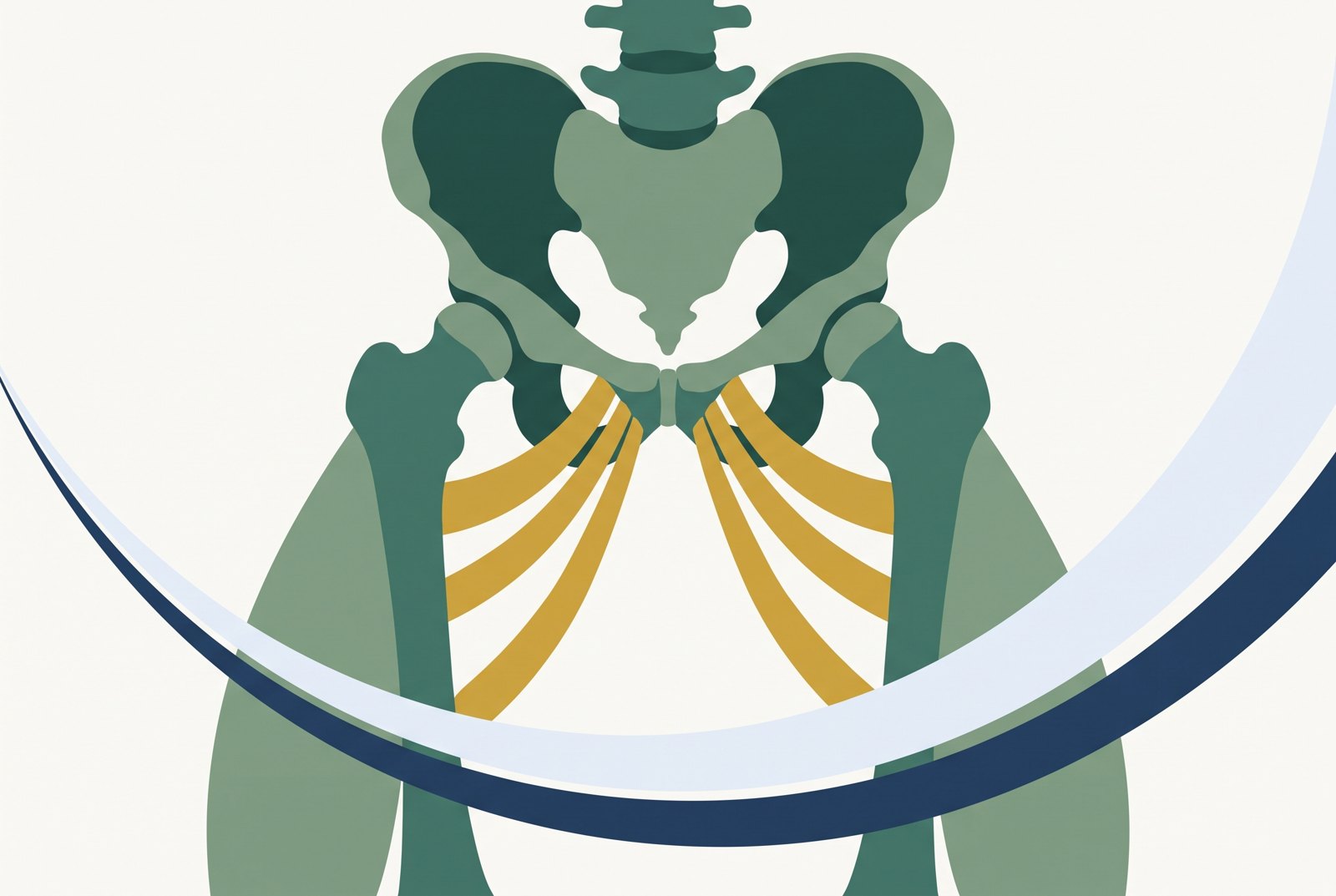
Hockey players get groin and hip problems because the skating stride is an adductor event repeated thousands of times per game: the leg drives out and the inner thigh muscles pull it back, over and over, from a deep hip flexed crouch. The research bears out what every dressing room already knows. A one season study of elite female players in the Swedish Women’s Hockey League found the hip and groin was the most reported region for overuse problems, accounting for 35 percent of them, and the most burdensome, carrying roughly half the overuse severity score (Wörner and Eek, 2025). Lower limb injuries more broadly were the most frequent injury location in a meta-analysis of collegiate women’s ice hockey (Laaksonen and colleagues, 2026). Those cohorts were female, but the stride loads the same anatomy regardless of who is skating. When the adductors and hip flexors stay short and irritable between games, the whole hip complex stiffens, which is why hockey players and distance athletes end up describing surprisingly similar hips. Runners load the same region differently, and the running version of this page covers that side.
What does a massage session for a hockey player cover?
A hockey session with Bruno Panucci RMT works the skating pattern as a chain rather than one sore spot. You set the pressure. You can adjust it, or stop, at any time. The scale runs from soft through medium to deep, deep on request and never the default, and an irritable adductor usually responds better to patient, moderate work than to force. A typical hour at his Brantford in-home practice moves through the adductors and the front of the hip, the glutes and the outside of the hip that stabilize the stride, the low back that holds the crouch, and finishes at the shoulders and neck, which take the shooting and contact load; acute shoulder injuries were among the most common in the elite female cohort above (Wörner and Eek, 2025). Everything happens in a private treatment room, draped to College of Massage Therapists of Ontario standards, with consent for each area of work. This is the same chain-first approach behind Bruno’s broader sports massage work in Brantford, tuned to what skating specifically builds.
| Region | What hockey does to it | What the session does there |
|---|---|---|
| Adductors (groin) | Pull the leg back on every stride; the signature hockey tightness | Slow, patient work through the inner thigh, at the pressure you choose |
| Hip flexors | Shorten in the skating crouch and stay short off the ice | Lengthening work at the front of the hip |
| Glutes and lateral hip | Stabilize the stride; grind quietly all season | Broad work through the glutes and the outside of the hip |
| Low back | Holds the crouch, loaded from above and below | Unhurried work once the hips have let go |
| Shoulders and neck | Absorb shooting, board contact, and bracing | Focused work through the shoulders, upper traps, and neck |
Can massage help hockey recovery between games?
Massage between games can ease the muscle tightness and general soreness a heavy hockey week leaves behind, and that is the honest extent of the claim. It does not flush toxins, it does not speed tissue healing, and it does not substitute for sleep, food, or sensible scheduling; those do the real recovering. What a session offers a mid-season player is meaningful short term relief in the regions the game keeps loading, plus an hour where a careful therapist notices what is tightening before it becomes the thing that keeps you off the ice. Bruno Panucci RMT schedules around game calendars where he can, and his booking is flexible: many players text him for a session in the day or two after a weekend tournament rather than holding a fixed weekly slot. Receipts work with most extended health plans, so a season of maintenance often costs less out of pocket than players expect.
Does massage prevent hockey injuries?
Massage does not prevent hockey injuries, and a page that claimed otherwise would be selling you something. Prevention, where the evidence exists, points at exercise: a scoping review of 19 randomized trials on preventing athletic groin pain found the Copenhagen adduction exercise was by far the most studied approach, with improvements in adductor strength and reduced injury incidence in some trials, while noting that the exercise alone shows limited preventive effects and that broader, multifaceted programs are still being developed (Saito and colleagues, 2025). In youth hockey, the strongest documented protections are policy and equipment, rule changes around body checking and full facial protection, alongside neuromuscular training (Zheng and colleagues, 2025). Massage sits beside all of that as recovery support and tightness management, not as armour. Bruno is straightforward about this at intake: keep the strength work your coach or physiotherapist gave you, and use massage for what it actually does.
What about youth and minor hockey players?
Youth hockey players carry real load: injury rates in youth ice hockey range from roughly 11.7 to 34.4 per 1000 athlete hours, among the highest in youth team sport (Zheng and colleagues, 2025). Massage can be a reasonable part of a young player’s routine for muscle tightness and recovery, with two firm conditions at Bruno’s practice. First, anyone under 18 must have a parent or guardian in the room for the entire session, no exceptions. Second, anything that looks like an injury rather than tightness, a sudden groin grab, a hit that left symptoms, any head contact, goes to a physician before it goes anywhere near a massage table. Concussions were the most frequent injury type in a meta-analysis of collegiate women’s ice hockey (Laaksonen and colleagues, 2026) and a leading concern in youth hockey (Zheng and colleagues, 2025), and they are entirely outside what massage addresses. For the routine tightness of a long minor hockey season, though, the same hips and adductors respond to the same careful work, at a lighter default pressure.
Frequently asked questions
Can massage fix a groin strain from hockey?
No. A groin strain is an injury, and injuries are assessed by a physician or physiotherapist first. Massage may help with the general tightness around a recovering area once you have clearance, and with the season-long adductor tightness that is not a strain, but it does not treat or speed the healing of a strain itself.
When should a hockey player book, before or after games?
Most players do better booking a day or two after games, when the goal is recovery from load. Right before a game, deep work can leave muscles feeling flat, so if you book pre-game, tell Bruno and he will keep the work lighter. Text him around your schedule; he can often fit players in after a weekend tournament.
How much does a hockey massage cost in Brantford?
A 60 minute session at Bruno Panucci RMT’s in-home practice in Brantford is $115. There are no packages or memberships, you simply book when the season demands it, and you receive an official Registered Massage Therapy receipt with everything your insurer needs.
Does Bruno treat minor hockey players?
Yes, with a firm rule: anyone under 18 must have a parent or guardian in the room for the entire session. For young players, the default pressure is lighter, and anything that resembles an injury, including any head contact with symptoms, is directed to a physician before any massage work.
Book a hockey recovery massage with Bruno in Brantford
Bruno Panucci RMT treats hockey tightness, groin, hips, low back, and shoulders, at his in-home practice in Brantford, serving Brant County including Paris, St. George, Mt. Pleasant, and Burford, with occasional mobile visits on request. Sessions are $115 for 60 minutes, with receipts for most extended health plans and direct billing available for most insurers.
Text Bruno at 519-753-5544 (he prefers texts), call the same number, or book online. Playing a tournament weekend, or need a time the calendar does not show? Text him about a slot outside posted hours, a shorter session, or a 90 minute session. He can often rearrange to fit you in, sometimes the same day.
A note on scope: This page is general information, not medical advice. Massage may ease hockey-related muscle tightness and support how you feel between games, but it does not treat, prevent, or speed the healing of injuries. A sudden groin grab, any suspected concussion or head contact with symptoms, joint swelling, or pain that changes how you skate deserves a physician assessment first. Bruno Panucci is a Registered Massage Therapist (RMT), and works within current RMT scope of practice.
Related reading
- how sports massage sessions work
- the hip tension guide
- massage for runners, the other hip-heavy sport
Sources
- Wörner T, Eek F. Incidence, Prevalence, and Burden of Health Problems in Elite Female Ice Hockey Players. Translational Sports Medicine, 2025. doi.org/10.1155/tsm2/5092272
- Laaksonen J, Pakarinen O, Vaajala M, Liukkonen R, Kuitunen I. Lower limb injuries and concussions dominate in collegiate women’s ice hockey: a systematic review and meta-analysis. BMJ Open Sport and Exercise Medicine, 2026. doi.org/10.1136/bmjsem-2025-002684
- Saito H, Hakariya N, Ebato T, Hirose N. A Scoping Review of Exercises for Preventing Athletic Groin Pain. Cureus, 2025. doi.org/10.7759/cureus.99883
- Zheng Y, Liu Y, Chen Y, Cao J, Chen E, Pan H, Huang P. Research Progress on Common Sports Injuries Among Youth Ice Hockey Players and Prevention Strategies: A Narrative Review. Sports, 2025. doi.org/10.3390/sports13120449
- College of Massage Therapists of Ontario, Standards of Practice.
- Government of Ontario. Massage Therapy Act, 1991, S.O. 1991, c. 27. ontario.ca/laws/statute/91m27