Bruno Panucci RMT
Why Does Massage Feel So Good? The Real Science
Quick answer: Massage feels so good because gentle, skin-to-skin pressure activates a class of nerve fibres tuned to pleasant touch, calms the nervous system into its rest-and-recover setting, and eases muscle tension all at once. That good feeling is a real, measurable response in the body, not toxins leaving or energy moving. Bruno Panucci RMT provides Registered Massage Therapy in Brantford at $115 for 60 minutes, at the pressure you choose. This page is general information, not medical advice.
Why massage feels so good is really a question about the nervous system. Human skin carries a specialised class of nerve fibres, called C-tactile or CT afferents, that are tuned specifically to slow, gentle, skin-temperature touch, and stimulating them registers in the brain as pleasant (Ferreira and colleagues, 2024). Bruno Panucci RMT has practised Registered Massage Therapy for 25 years, is registered with the College of Massage Therapists of Ontario (CMTO), and works from his in-home practice in Brantford, serving Brant County towns including Paris, St. George, Mt. Pleasant, and Burford. The good feeling you get on the table is honest biology, and understanding what massage is actually doing in the body makes it easier to trust and easier to use well.
Bruno Panucci RMT, 25 years of practice: “People sometimes apologise for enjoying a massage too much, like the relaxation is a bonus and the ‘real’ work is elsewhere. I tell them the opposite. Feeling calm and cared for is not a side effect, it is a large part of the effect. Twenty-five years in, I have watched people arrive wound tight and leave breathing slower, and there is nothing mystical about it. It is skin, nerves, and a body finally getting the signal that it is safe to settle.”
In short: massage feels good because pleasant-touch nerves in the skin send a rewarding signal to the brain, while the pressure and rhythm shift the body toward its calming, rest-and-recover state and ease tight muscle. The pleasure is a genuine nervous-system response, well documented in research, and it is not evidence of toxins being flushed or energy being balanced.
6 min read
What makes touch feel pleasant in the first place?
Pleasant touch has a dedicated pathway in the body. Alongside the nerves that let you tell hot from cold or sharp from dull, the skin carries C-tactile afferents, unmyelinated fibres found mainly in hairy skin that respond best to slow, gentle stroking delivered at around skin temperature (Ferreira and colleagues, 2024). When these fibres fire, the signal is processed largely in the insular cortex, a brain region tied to emotion, rather than in the map that simply locates a poke on your arm. In other words, part of your nervous system exists specifically to register affectionate, gentle contact as good. Researchers reviewing this affective-touch system report that CT stimulation is linked to the release of oxytocin and dopamine and to activity in the brain’s reward network, which helps explain the calm, contented feeling that gentle touch produces (Papi and colleagues, 2025). That study looked at people with psychological conditions rather than the general public, so the mechanism is better understood than the exact clinical dose, but the core wiring is the same in all of us. This is the honest foundation under a good massage, and it is one reason a light, relaxing session can feel every bit as valuable as deep work. If the calm end of the scale is what you are after, relaxation-focused massage leans directly into it.
Why does massage make you feel so relaxed?
The relaxation you feel during massage is a genuine shift in the nervous system, not just a mood. Your autonomic nervous system has two broad settings: the sympathetic “fight or flight” gear that revs you up, and the parasympathetic “rest and digest” gear that lets you recover. Sustained, rhythmic, comfortable touch nudges the body toward that parasympathetic side. Reviews of touch therapy describe massage producing a relaxed physiologic state, with effects such as lowered blood pressure and slower breathing reported in some clinical settings (Ferreira and colleagues, 2024). Gentle affective touch has also been associated with oxytocin release, which carries anti-stress effects (Ferreira and colleagues, 2024). At Bruno Panucci RMT’s in-home practice in Brantford, this is often the part clients notice most: shoulders drop, the jaw unclenches, and a busy mind quiets. Because that calming response is so much of the benefit, massage is a reasonable, drug-free support for everyday stress, and there is a fuller page on easing an overloaded nervous system. It supports and eases; it does not cure anxiety or replace care from your physician.
A note on scope: This page is general information, not medical advice. Registered Massage Therapy can support comfort, relaxation, and function, but it is not a cure for any condition and it does not treat disease. If you have a health concern, or any new, severe, or unexplained symptom, speak with your physician first. Bruno Panucci is a Registered Massage Therapist (RMT), and works within current RMT scope of practice.
Why does the muscle work itself feel good, even when it is firm?
The hands-on muscle work has its own kind of satisfaction, separate from light stroking. Firm, sustained pressure into a tight area often produces that “good hurt”, a sensation people describe as relief rather than pain. Part of this is competing sensory input: strong, steady pressure gives the nervous system a large, pleasant signal to attend to, which can quiet a smaller ache underneath. Part of it is simply that held tension in a muscle is uncomfortable, and easing it feels like putting something down you had been carrying. Reviewers of massage note that it can help release muscle tightness and produce competing sensory stimuli alongside a pleasant, relaxed feeling (Ferreira and colleagues, 2024). With 25 years of clinical experience across a wide range of soft-tissue complaints, Bruno reads the tissue and works to the depth you ask for, from soft through medium to deep. The point is comfort and function, not toughing out pain.
Does massage feel good because it releases toxins?
No. This is the most common myth about why massage feels good, and it is worth stating plainly: massage does not flush toxins from the body, does not detox you, and does not cause weight loss. Your liver and kidneys handle clearing waste, and there is no toxin that a massage squeezes out. The pleasant, sometimes slightly wrung-out feeling afterward is far better explained by the real mechanisms above, pleasant-touch nerves, a calmer nervous system, and eased muscle tension, than by any drainage story. Research on why touch feels good centres on nerve pathways and the brain’s reward and emotion circuits, not on toxin removal (Ferreira and colleagues, 2024; Papi and colleagues, 2025). Being honest about this matters, because a therapist who oversells a mechanism is usually overselling the result too. The genuine science is more than enough reason to book.
Does massage have to hurt to work?
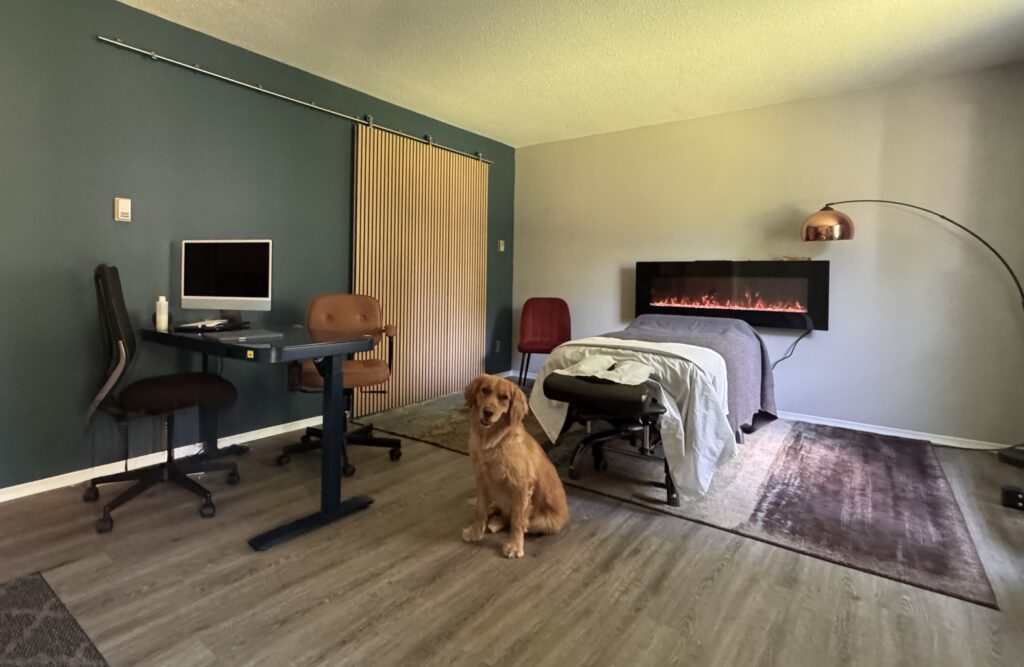
Massage does not have to hurt to feel good or to help. The idea that deeper is always better is another myth. Gentle, slow touch is the very stimulus those pleasant-touch nerve fibres are tuned to, which is why a light relaxation session can feel deeply satisfying and calming (Ferreira and colleagues, 2024). Firmer work suits some bodies and some goals, but it is a choice, not a requirement. You set the pressure. You can adjust it, or stop, at any time. At Bruno Panucci RMT’s Brantford practice the default runs soft to medium, with the deepest pressure offered on request, never imposed. A practical tip from Bruno: if it has been more than a few months since your last massage, take a little less pressure the first time, so you leave with pleasant tenderness instead of soreness the next day.
| Reason it feels good | What is actually happening | Honest limit |
|---|---|---|
| Pleasant-touch nerves | CT fibres tuned to gentle touch signal the brain’s emotion and reward areas | A real, pleasant response; not a cure for any condition |
| Parasympathetic shift | Rhythmic touch nudges the body toward its rest-and-recover setting | Supports and eases stress; does not replace medical care |
| “Releasing toxins” (myth) | Nothing. The liver and kidneys clear waste, not massage | No detox, no toxin flush, no weight loss |
Frequently asked questions
Why does massage feel so good even when nothing hurts?
Because pleasant touch has its own dedicated nerve pathway. Gentle, slow, skin-temperature contact activates C-tactile fibres that the brain registers as rewarding, and rhythmic touch shifts the nervous system toward its calming, rest-and-recover setting. You do not need pain or an injury for that to feel good.
Does the good feeling mean toxins are leaving my body?
No. Massage does not flush toxins, detox you, or cause weight loss. Your liver and kidneys clear waste. The pleasant feeling comes from touch-sensitive nerves, a calmer nervous system, and eased muscle tension, which is honest science and reason enough on its own.
Is a gentle massage as worthwhile as a deep one?
It can be. Gentle, slow touch is exactly what the pleasant-touch nerve fibres respond to best, so a light relaxation session is genuinely valuable, not a lesser option. Firmer pressure suits some goals, but it is your choice. You set the pressure and can change it at any time.
Can massage really lower stress, or does it just feel nice?
Both. Sustained, comfortable touch is linked to a relaxed physiologic state and, in some settings, to lower blood pressure and slower breathing. Bruno Panucci RMT in Brantford offers it as a drug-free support for everyday stress. It eases tension but is not a cure and does not replace care from your physician.
Book a massage with Bruno in Brantford
If you want to feel that calm, cared-for shift for yourself, Bruno Panucci RMT provides Registered Massage Therapy at his in-home practice in Brantford, serving Brant County including Paris, St. George, Mt. Pleasant, and Burford, with occasional mobile visits on request. Sessions are $115 for 60 minutes, at the pressure you choose, and receipts work with most extended health plans, with direct billing available for most insurers.
Text Bruno at 519-753-5544 (he prefers texts), call the same number, or book online. Need a time the calendar does not show, or a 90 minute or two hour session? Text him directly. He can often rearrange to fit you in, sometimes the same day.
Related reading
- the mechanics behind a massage, explained plainly
- relaxation massage for the calm end of the scale
- using massage to ease everyday stress
Sources
- Ferreira BR, Aguirre CC, Rapoport-Hubschman N, Adewuya AO, Canchy L, Morizet D, Vincenzi F, McGlone FP. The skin-brain connection and pleasant touch as supportive care for psychocutaneous disorders. Skin Health and Disease, 2024. doi.org/10.1002/ski2.310
- Papi M, Decandia D, Laricchiuta D, Cutuli D, Buratta L, Peciccia M, Mazzeschi C. The role of affective touch in mental illness: a systematic review of CT fiber dysregulation in psychological disorders and the therapeutic potential of CT fiber stimulation. Frontiers in Psychiatry, 2025. doi.org/10.3389/fpsyt.2025.1498006
- College of Massage Therapists of Ontario, Standards of Practice.
- Government of Ontario. Massage Therapy Act, 1991, S.O. 1991, c. 27. ontario.ca/laws/statute/91m27