Bruno Panucci RMT
Thoracic Outlet Syndrome Massage in Brantford: Honest Help
Quick answer: Thoracic outlet syndrome massage in Brantford, with Bruno Panucci RMT, works on the muscular contributors to TOS, tight scalenes in the neck, a shortened pectoralis minor in the chest, and the rounded posture pattern behind both. Massage may ease those tissues; it does not decompress the nerves or blood vessels themselves, and vascular symptoms like arm swelling, colour change, or coldness belong with a physician first. Sessions are $115 for 60 minutes at his in-home practice. This page is general information, not medical advice.
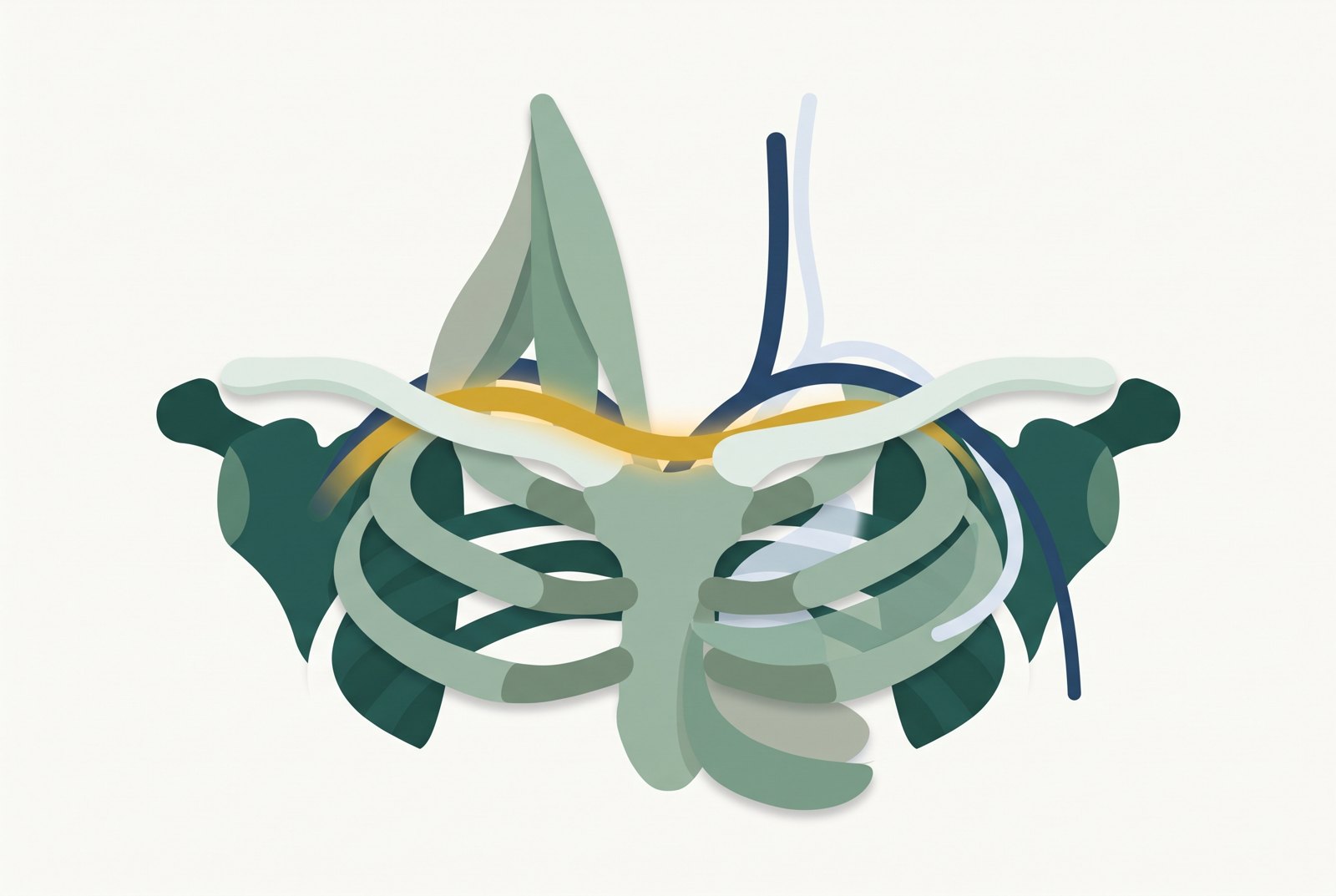
Thoracic outlet syndrome is a group of conditions in which nerves or blood vessels are compressed in the thoracic outlet, the narrow passage between the collarbone, the first rib, and the scalene muscles of the neck. It comes in neurogenic and vascular forms, and the difference matters for massage. Bruno Panucci RMT is a Registered Massage Therapist with 25 years of hands-on experience, working from a private in-home practice in Brantford and serving Brant County towns including Paris, St. George, Mt. Pleasant, and Burford. He is registered with the College of Massage Therapists of Ontario, and his role with TOS is deliberately modest: careful soft-tissue work around the scalenes, chest, and shoulders, the same territory covered in his neck and shoulder massage sessions, offered alongside, never instead of, your physician’s diagnosis and plan.
Bruno Panucci RMT, 25 years of practice: “Thoracic outlet syndrome is one of the conditions where I am most careful about what I promise. If your arm is swelling, changing colour, or going cold, that is not a massage problem, that is a doctor problem, today. Where I can genuinely help is the muscle side of the picture, the scalenes and the chest wall that have shortened around a desk posture. I work on the tissue, not the compression itself, and I say so up front.”
In short: massage for thoracic outlet syndrome is soft-tissue work aimed at the muscles that can crowd the thoracic outlet, mainly the scalenes and pectoralis minor, and the posture pattern that shortens them. It may ease tension and support a physician-led plan. It does not release the compression itself, and it is not appropriate as the first response to vascular symptoms.
6 min read
What is thoracic outlet syndrome, and which type do you have?
Thoracic outlet syndrome is compression of the nerves or blood vessels that pass through the thoracic outlet on their way from the neck into the arm. The neurogenic form, by far the most common, compresses the brachial plexus and tends to produce aching, tingling, numbness, or weakness down the arm and into the hand, often worse with overhead work. The vascular forms compress the subclavian artery or vein and can produce swelling, heaviness, colour change toward blue or violet, or a cold, pale hand. That distinction is the single most important thing to sort out, because the vascular forms can involve clots and need medical assessment first, not a massage table. In one published vascular case, a woman developed arm pain with oedema and mild violet discolouration after a venous thrombosis, and rehabilitation only proceeded after the medical episode had been diagnosed and managed (Wierciak-Rokowska and colleagues, 2024). If your symptoms are mostly nervy, they can overlap with other nerve-irritation patterns, which is why it helps to read this alongside how Bruno approaches massage when a nerve feels pinched. Diagnosis of any TOS type belongs with your physician; massage never confirms or rules it out.
Can massage help thoracic outlet syndrome?
Massage may help the muscular side of thoracic outlet syndrome, and that phrasing is deliberate. A 2026 systematic review found that structured conservative care, including postural correction, stretching of the scalenes and pectoralis minor, scapular stabilization, and neural mobilization, is effective as a primary conservative treatment for reducing pain and improving upper limb function in TOS (Joshi and colleagues, 2026). Massage therapy is not the same thing as that full physiotherapy package, but it works the same tissues: the scalene muscles at the side of the neck, the pectoralis minor under the collarbone, and the upper-back muscles that let the shoulder blade sit where it should. When those tissues are chronically shortened by rounded, forward-head posture, careful soft-tissue work may reduce the tension and discomfort they contribute. What massage does not do is decompress the thoracic outlet, move a rib, or fix the anatomy causing the compression. Bruno Panucci RMT will not claim otherwise. The same review also noted that persistent symptoms are often shaped by factors like central sensitization and fear of movement, which is a good argument for calm, unhurried, well-communicated care rather than aggressive digging. Because posture is so often the thread running through neurogenic TOS, many people pair this work with massage for desk posture and rounded shoulders.
What does a TOS-aware massage session involve?
A TOS-aware massage session at Bruno’s Brantford in-home practice starts with a careful health history: what your physician has said, which arm positions provoke symptoms, and whether anything vascular has ever been flagged. You set the pressure, and you can adjust it, or stop, at any time. The work itself is slower and lighter than people expect, because the scalenes sit near sensitive structures and respond better to patient, moderate work than to force. Pressure follows the usual gradient, soft through medium to deep, with deep work on request only and rarely the right choice near the front of the neck. Bruno typically works the scalenes, the pectoral region, the muscles between the shoulder blades, and the forearm if symptoms travel that far, checking in about arm tingling as he goes, since reproducing your symptoms is a signal to ease off, not push through. Conservative, stepwise care that respects the irritated nerve has support even in athletic cases: a published case report of a collegiate pitcher whose elbow problem was complicated by neurogenic TOS used a staged conservative program, beginning with the shoulder and neck contributors, and avoided surgery entirely (Kobayashi and colleagues, 2025). Treatment happens in a private treatment room, draped to College of Massage Therapists of Ontario standards, and two friendly, calm dogs share the room, kept out on request if you prefer.
| Aspect of TOS | Where massage may help | What it cannot do |
|---|---|---|
| Tight scalenes | Careful, moderate soft-tissue work may ease tension at the side of the neck. | It cannot decompress the brachial plexus or change the anatomy of the outlet. |
| Shortened pectoralis minor | Chest-wall work and time may reduce the pull of rounded-shoulder posture. | It cannot substitute for a structured strengthening and postural program. |
| Posture pattern | Easing tight tissue may make postural correction easier to hold. | Lasting change still comes from the exercises your physician or physiotherapist prescribes. |
| Vascular symptoms | Nothing, until a physician has assessed and cleared you. | Massage must never be the first response to swelling, colour change, or a cold arm. |
When is thoracic outlet syndrome a physician-first problem?
Thoracic outlet syndrome is a physician-first problem whenever the symptoms suggest the blood vessels rather than the muscles. See a doctor promptly, before booking any massage, if your arm or hand swells, feels heavy, changes colour toward blue, violet, or unusual paleness, or turns cold compared with the other side. Those are possible signs of vascular TOS, which can involve a clot in the subclavian vein or artery and is treated medically. The same physician-first rule applies to sudden severe weakness, a hand that is visibly wasting, symptoms after an injury such as a collarbone fracture, or arm symptoms paired with chest pain or shortness of breath, which need urgent care. Once a physician has diagnosed the problem and cleared you for conservative care, soft-tissue work can join the plan; the vascular case above showed meaningful improvement through supervised rehabilitation even long after the thrombosis episode, but only within a medically managed protocol (Wierciak-Rokowska and colleagues, 2024). Bruno Panucci RMT treats that sequence as non-negotiable. Massage supports comfort in the muscles around the thoracic outlet; it does not treat, cure, or speed the healing of the syndrome itself.
Frequently asked questions
Can massage cure thoracic outlet syndrome?
No. Massage does not cure thoracic outlet syndrome and does not release the compression on the nerves or blood vessels. What it may do is ease tension in the muscular contributors, mainly the scalenes and pectoralis minor, and support the physician-led plan you are already following. Bruno is direct about that limit before the first session.
Is it safe to massage the scalenes?
In careful, trained hands, yes, with moderate pressure and constant communication. The scalenes sit near sensitive structures at the side of the neck, so Bruno works them slowly, avoids forcing depth, and treats any reproduction of your arm tingling as a signal to ease off. Deep pressure there is not the goal, and you can adjust or stop at any time.
Should I get a massage if my arm is swelling or changing colour?
No, see a physician first. Swelling, heaviness, blue or violet colour change, unusual paleness, or a cold hand can point to vascular thoracic outlet syndrome, which may involve a clot and needs medical assessment before any hands-on work. Once your doctor has diagnosed the problem and cleared you for conservative care, massage can be discussed as part of the plan.
How much does a massage for thoracic outlet syndrome cost in Brantford?
A 60-minute Registered Massage Therapy session at Bruno’s Brantford in-home practice is $115, and you receive an official Registered Massage Therapy receipt with everything your insurer needs. For a 90-minute session or a time the online calendar does not show, text Bruno at 519-753-5544 and he can often fit you in, sometimes the same day.
Book a TOS-aware massage with Bruno in Brantford
Bruno Panucci RMT offers careful, honest Registered Massage Therapy for the muscular side of thoracic outlet syndrome at his in-home practice in Brantford, serving Brant County including Paris, St. George, Mt. Pleasant, and Burford, with a limited number of mobile visits available on request. Sessions are $115 for 60 minutes, with receipts for most extended health plans and direct billing available for most insurers.
Text Bruno at 519-753-5544 (he prefers texts), call the same number, or book online. If you need a time the calendar does not show, a shorter session, or a 90-minute session, text him directly. He can often rearrange to fit you in, sometimes the same day.
A note on scope: This page is general information, not medical advice. Thoracic outlet syndrome is a medical condition, and its diagnosis and management belong with your physician, especially any vascular symptoms such as arm swelling, colour change, or coldness, which need medical assessment before any massage. Registered Massage Therapy may support comfort in the surrounding muscles, but it does not treat or cure the syndrome. Bruno Panucci is a Registered Massage Therapist (RMT), and works within current RMT scope of practice.
Related reading
- work through the neck and shoulders
- when a nerve feels trapped or irritated
- undoing the desk-posture pattern
- session lengths and rates
Sources
- Joshi AV, Shinde S, Chaudhary NS, Chaudhary S. Evidence-Based Diagnostic and Therapeutic Methods for Thoracic Outlet Syndrome: A Systematic Review. Cureus, 2026. doi.org/10.7759/cureus.108241
- Wierciak-Rokowska A, Sliwka A, Maga M, Gajda M, Bogucka K, Kaczmarczyk P, Maga P. Upper Vascular Thoracic Outlet Syndrome: A Case Study. Biomedicines, 2024. doi.org/10.3390/biomedicines12081829
- Kobayashi H, Kawabata M, Wagatsuma K, Miwa T, Iwamoto W. Ultrasound-Guided Physiotherapy for Symptomatic Ulnar Nerve Dislocation in a Collegiate Baseball Pitcher: A Case Report. Cureus, 2025. doi.org/10.7759/cureus.95903
- College of Massage Therapists of Ontario, Standards of Practice.
- Government of Ontario. Massage Therapy Act, 1991, S.O. 1991, c. 27. ontario.ca/laws/statute/91m27