Bruno Panucci RMT
Massage Gun vs Massage Therapy: What Each One Does
Quick answer: A massage gun and massage therapy are not the same thing, so neither is simply better. A massage gun is a handheld percussive device that vibrates one spot of muscle, and research suggests it may ease short-term soreness. Registered Massage Therapy is regulated, hands-on care that assesses your tissue, adapts pressure from soft to deep, and reaches areas a device cannot. Bruno Panucci RMT offers massage therapy in Brantford at $115 for 60 minutes. Use a gun for quick self-care between sessions. This page is general information, not medical advice.
People weigh a massage gun vs massage therapy because both promise relief from tight, aching muscles, yet they are not the same purchase or the same experience. Bruno Panucci RMT has practised Registered Massage Therapy for 25 years, is registered with the College of Massage Therapists of Ontario (CMTO), and works from a private in-home practice in Brantford, serving Brant County towns including Paris, St. George, Mt. Pleasant, and Burford. A percussive device and a trained pair of hands do genuinely different jobs, and for most people the honest answer is that they work best together. If you want the hands-on side, the details of Bruno’s Registered Massage Therapy sessions cover what each appointment includes and what it costs.
Bruno Panucci RMT, 25 years of practice: “I own a massage gun and I tell clients to buy one. It is great for a quick loosen-up on a big muscle after a workout. What it cannot do is feel what is going on under the skin, ease off where you flinch, or reach the jaw and the small muscles that hold real tension. A device runs one pattern. A session is 25 years of hands paying attention to your body. Use the gun between visits, and let me do the part it cannot.”
In short: a massage gun is a handheld percussive device for quick, do-it-yourself soreness relief, and Registered Massage Therapy is regulated, hands-on care that assesses your tissue and adapts pressure from soft to deep. They are not rivals. A gun helps between sessions, and hands do what a device cannot.
6 min read
What is the difference between a massage gun and massage therapy?
A massage gun and massage therapy are two different things that happen to target the same complaint, tight and sore muscle. A massage gun is a handheld, battery-powered device that delivers rapid percussive taps to one point of muscle at a time, and you aim it yourself. Registered Massage Therapy is a regulated Ontario health service in which a trained therapist assesses your soft tissue and treats it by hand, adjusting to what the tissue is doing under the pressure. Under Ontario’s Massage Therapy Act, 1991, only a registered practitioner may use the protected title RMT, and the College of Massage Therapists of Ontario (CMTO) sets the standards for assessment, consent, and draping. So the plainest difference is this: a massage gun is a tool you operate, and massage therapy is care a person provides. Bruno Panucci RMT offers that hands-on care in Brantford, and he is the first to say a good massage gun is still worth owning.
What is a massage gun actually good for?
A massage gun is genuinely good at a narrow set of things, mostly around muscle soreness after exercise. Percussive vibration seems to calm how sore and sensitive a muscle feels for a short while. A 2019 meta-analysis of ten randomized trials by Lu and colleagues found that vibration significantly reduced muscle soreness on a visual analogue scale at 24, 48, and 72 hours after exercise, though the authors were careful to note that the overall quality of the evidence was relatively poor. A 2026 randomized clinical trial by da Rosa Castilho and colleagues found that percussive massage on fatigued quadriceps reduced pain over time, while showing no clear strength advantage over simply resting. So the fair summary is that a massage gun may ease delayed-onset muscle soreness and feels good on a large, tired muscle, but it is a symptom-relief tool, not a treatment that changes the underlying tissue. For training-related aches, it pairs well with the hands-on recovery work Bruno does for active bodies.
What can a therapist’s hands do that a massage gun cannot?
A trained pair of hands can do several things a massage gun simply cannot. Hands assess as they work, feeling for where tissue is tight, guarded, or tender, and then changing approach based on what they find. You set the pressure, and you can adjust it, or stop, at any time. In a session with Bruno Panucci RMT the pressure runs from soft through medium to deep, with the deepest work offered only on request. A massage gun cannot read your body or ease off when a spot needs a lighter touch. Hands also reach places a device should not go, like the jaw for TMJ and jaw-tension work, and they can deliver the gentle, rhythmic strokes used in lymphatic drainage massage, both of which are Registered Massage Therapy within scope. A therapist can also work the tight, tender spots people call knots with sustained, targeted pressure rather than buzzing over them, which is the focus of Bruno’s work on muscle knots and trigger points. Under CMTO standards, all of it happens with your consent and proper draping.
Should you use a massage gun before a workout?
Using a massage gun right before a workout or a game is probably a mistake if performance matters. In a 2025 crossover study of trained athletes, Ormeno and Driller found that adding a massage gun to a dynamic warm-up was associated with impaired sprint time and reduced jump height compared with the warm-up alone, and foam rolling showed a similar dip. The likely reason is that percussion briefly relaxes a muscle you are about to ask to fire hard. A better plan is to keep the massage gun for after training or on rest days, when the goal is easing soreness rather than producing power. A proper dynamic warm-up, moving the joints and muscles you are about to use, does more for readiness than any device. If your sport leaves you consistently sore or tight, that is a signal for hands-on care, not just more buzzing.
Massage gun or massage therapist: which should you use?
Choosing between a massage gun and a massage therapist is usually the wrong question, because they solve different problems and cost different amounts. A massage gun is a one-time purchase for quick, do-it-yourself relief, while Registered Massage Therapy is a booked session with a regulated practitioner who assesses, adapts, and treats. The table below lays out where each one fits. One thing neither one does is detox you or flush toxins, despite what device marketing sometimes implies. Your liver and kidneys clear waste, and massage of any kind eases tension and comfort rather than cleaning your blood. A massage gun sits in the same self-care category as a foam roller, and if you are weighing those two, how foam rolling compares with hands-on massage goes deeper on that pair.
| Aspect | Massage gun | Registered Massage Therapy |
|---|---|---|
| What it is | Handheld percussive device you operate | Regulated, hands-on care from an RMT |
| Who controls it | You, aiming at one spot | The therapist, guided by your feedback |
| Assessment | None | Assesses tissue and adapts in real time |
| Pressure | One fixed vibration pattern | Soft through medium to deep, your choice, deep on request |
| Reaches | Large, easy-to-target muscles | The jaw (TMJ), the full back, areas a device should avoid |
| Best for | Quick post-exercise soreness, self-care between sessions | Assessment, targeted tension, relaxation, lymphatic and TMJ work |
| Cost | One-time device purchase | $115 for 60 minutes with Bruno in Brantford |
| Evidence | Short-term soreness relief, study quality mixed | Regulated care, receipts for most extended health plans |
Used together, they cover more than either one alone: the massage gun for a quick reset at home, and a session with Bruno Panucci RMT when a problem needs assessment and a human touch. That is the honest answer to massage gun vs massage. It is not a contest.
Frequently asked questions
Is a massage gun as good as a real massage?
They are not the same thing, so one is not simply better than the other. A massage gun applies rapid vibration to one area and can offer short-term relief from muscle soreness. Registered Massage Therapy adds a trained assessment, pressure that adjusts from soft to deep, and hands that reach places a device cannot. Bruno Panucci RMT in Brantford sees the gun as a useful tool between sessions, not a replacement for hands-on care.
Are massage guns safe to use at home?
For most healthy people a massage gun is reasonably safe on large, fleshy muscles when used gently and briefly. Keep it off bone, the spine, the front of the neck, bruises, and any area that is swollen, injured, or numb. If you are pregnant, take blood thinners, or have a circulatory condition, speak with your physician first. When in doubt, less time and lighter pressure is the safer choice.
Should I use a massage gun before or after exercise?
Evidence suggests timing matters. In a 2025 study of trained athletes, Ormeno and Driller found that using a massage gun as part of a warm-up was linked to worse sprint and jump results, so a device is better kept for after training or on rest days. For quick post-exercise soreness, brief use on the sore muscle is reasonable. For deeper or recurring tension, book hands-on care.
Does a massage gun get rid of knots or toxins?
A massage gun can temporarily reduce the tight, tender feeling people call a knot, mostly by easing muscle tone and how sensitive the area feels. Neither a massage gun nor massage therapy flushes toxins out of the body, and there is no detox or weight-loss effect. Your liver and kidneys clear waste. Massage supports comfort and eases tension, and it does not detox you.
Book a massage with Bruno in Brantford
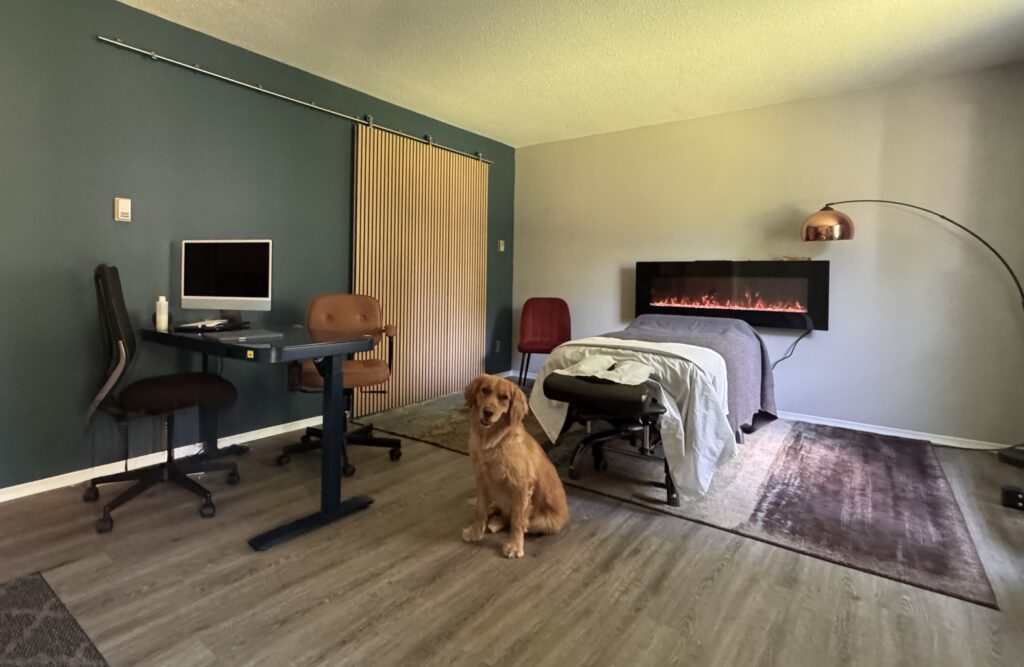
If you want the hands-on side of this comparison, Bruno Panucci RMT provides Registered Massage Therapy at his in-home practice in Brantford, serving Brant County including Paris, St. George, Mt. Pleasant, and Burford, with occasional mobile visits on request. Sessions are $115 for 60 minutes, receipts work with most extended health plans, and direct billing is available for most insurers. Two friendly, calm dogs share the treatment room, and Bruno can keep them out if you have allergies or a preference.
Text Bruno at 519-753-5544 (he prefers texts), call the same number, or book online. Need a time the calendar does not show, or a 90 minute or two hour session? Text him directly. He can often rearrange to fit you in, sometimes the same day.
A note on scope: This page is general information, not medical advice. Registered Massage Therapy and self-care tools like massage guns can ease soreness and tension, but they do not cure, treat, or detox any condition. For new, severe, or unexplained pain, numbness, weakness, or pain after an injury, see your physician first. Bruno Panucci is a Registered Massage Therapist (RMT), and works within current RMT scope of practice.
Related reading
- foam rolling next to hands-on massage
- recovery massage for active bodies
- working out stubborn muscle knots
- what a session with Bruno includes
Sources
- Lu X, Wang Y, Lu J, You Y, Zhang L, Zhu D, Yao F. Does vibration benefit delayed-onset muscle soreness?: a meta-analysis and systematic review. Journal of International Medical Research, 2019; 47(1): 3-18. doi.org/10.1177/0300060518814999
- Ormeno L, Driller M. Does Massage Gun or Foam Roller Use During a Warm-Up Improve Performance in Trained Athletes? Sports, 2025; 13(9): 282. doi.org/10.3390/sports13090282
- da Rosa Castilho A, Aguiar AF, Ribeiro AS, et al. Acute Effect of Percussive Massage on Cross-Section Area, Muscle Strength, and Late Muscle Pain of the Quadriceps Muscle Following a Fatigue Protocol in Physically Active Men: Randomized Clinical Trial. Physiotherapy Research International, 2026. doi.org/10.1002/pri.70246
- College of Massage Therapists of Ontario, Standards of Practice.
- Government of Ontario. Massage Therapy Act, 1991, S.O. 1991, c. 27. ontario.ca/laws/statute/91m27