Bruno Panucci RMT
Myofascial Release, Explained Without the Mystique
Quick answer: Myofascial release is a slow, sustained soft-tissue technique that Bruno Panucci RMT uses within a regular Registered Massage Therapy session in Brantford, not a separate service or an upcharge. Instead of gliding, the therapist sinks in and waits, easing broad, stubborn tightness. Fascia is real connective tissue, but many marketing claims outrun the science. The work is included in the standard $115 session. This page is general information, not medical advice.
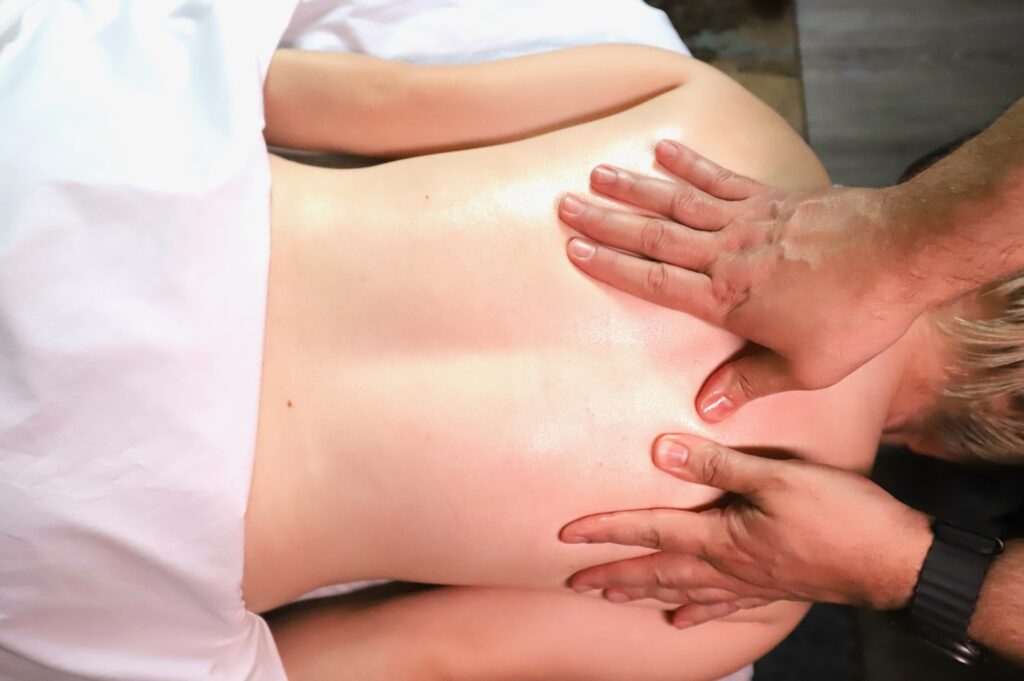
Myofascial release is a hands-on technique that works slowly into the fascia, the connective tissue that wraps and connects muscle throughout the body. Instead of the gliding, oiled strokes of a classic massage, Bruno Panucci RMT uses less oil, leans in with broad contact, and holds while the tissue softens. Across Brantford and Brant County, from Paris to St. George, Mt. Pleasant, and Burford, people book this expecting something mystical. It is not. It is one tool among many inside Registered Massage Therapy, most at home in the deep-tissue sessions where this work lives.
Bruno Panucci RMT, 25 years of practice: “Fascia became a buzzword and the claims got silly. I have heard people promise to melt knots, reshape your body, and undo years of stress in one hour. I use the technique most days, because slow, sustained pressure genuinely helps some kinds of tightness let go. I just skip the sales pitch. What is actually happening is closer to your nervous system deciding it is safe to relax than me reshaping your tissue like clay.”
In short: myofascial release is slow, sustained pressure applied to the body’s fascia, the connective tissue that surrounds muscle. It uses little oil and stays in one place rather than gliding. Fascia is genuine tissue, but the honest evidence points to nervous-system and pressure responses, not permanent physical reshaping in a single session.
6 min read
What is myofascial release, really?
Myofascial release is a soft-tissue technique that targets fascia, the collagen-rich connective tissue that runs through the whole body. A 2018 consensus statement in the British Journal of Sports Medicine describes the fascial system as a three-dimensional continuum of soft, collagen-containing connective tissue that links every muscle, so fascia is not one mysterious sheet but tissue that is genuinely everywhere. In practice, myofascial work means Bruno Panucci RMT applies broad, patient pressure and waits for the tissue to give, rather than kneading a single muscle. There is no cracking, no gouging, and no drama. The aim is to coax broad areas of tension to settle, which is why it feels less like a workout and more like a long, deliberate lean. For the evidence on cupping therapy and what Bruno offers instead, see the dedicated page. Where a single knot is the problem, targeted trigger-point work has a dedicated guide. The gentle approach to massage over a healed scar is covered separately.
What does myofascial release feel like?
Myofascial release feels slow and still compared with the massage most people picture. You set the pressure. You can adjust it, or stop, at any time. Bruno uses less oil for this work, because a little grip lets him stay with the tissue instead of sliding over it. He sinks to a comfortable depth, then holds while the area softens, often for thirty seconds to a couple of minutes in one spot. It should read as a deep, steady stretch you can breathe through, never sharp pain. The pressure runs on the same scale as the rest of a session, from soft through medium to deep, with the deeper end on request and never the default. For many people the waiting is the point: the release is the tissue and nervous system letting go, not a therapist forcing anything.
| Aspect | Gliding strokes | Sustained myofascial work |
|---|---|---|
| Feel | Flowing, rhythmic, moving over the skin | Still and deep, a steady lean that holds in place |
| Speed | Continuous, covers ground quickly | Slow, waits thirty seconds to a couple of minutes per spot |
| Oil | More oil, so hands slide freely | Less oil, so hands grip and stay with the tissue |
| Suited to | General relaxation, warming up an area, circulation | Broad, stubborn tightness that stays put across a whole region |
What does the research actually say about fascia and myofascial release?
Here is the honest version. Fascia is real and important, but the popular claims about myofascial release run ahead of the evidence. The British Journal of Sports Medicine consensus statement notes that manual techniques on fascial tissue are widely used but their efficacy still remains to be validated, and it warns that commercial interests often push premature positive conclusions about fascia treatments. When effects do show up, the likely mechanisms are not permanent structural change. The same statement points to altered blood flow, better sliding between tissue layers, and modified nervous-system excitability, rather than a therapist reshaping fascia by hand. That fits what is known about dense connective tissue: the force needed to permanently deform it is far beyond what any pair of hands applies in one hour. Even self-applied work tells a modest story. A 2019 meta-analysis in Frontiers in Physiology found the effects of foam rolling, essentially self-myofascial release, to be minor and partly negligible, though useful in some cases for flexibility and muscle soreness. This does not make the technique worthless. It means the reasonable promise is short-term easing of tightness and a calmer nervous system, not a fix for structure and not a permanent change to your architecture.
When does Bruno reach for myofascial release?
Bruno Panucci RMT reaches for myofascial release when tightness is broad, stubborn, and stays put. Some tension sits in one small spot and responds to focused work; other tension spreads across a whole region, like a tight sheet over the low back, the sides of the neck, or the band down the outside of the leg, and does not budge with quick strokes. That broad, been-there-for-months quality is where slow, sustained holds tend to earn their place. Long-standing patterns from years at a desk often respond better to patient pressure than to fast kneading, because the goal is to convince a guarded area to settle rather than to attack a single point. It is not the right tool for everything, and Bruno will say so. For how this compares with focused work on a single tight spot, see the plain story on muscle knots. Often one session blends both: some myofascial holds, some regular therapeutic massage, matched to what your body is doing.
Is myofascial release a separate service or an extra cost?
No. Myofascial release is not a separate service, a package, or an upcharge at Bruno’s Brantford in-home practice. It is simply one of the techniques he may use during a standard Registered Massage Therapy session, folded in when your body calls for it, at the same $115 for 60 minutes as any other appointment. Working from his own home keeps overhead low, which keeps that rate steady and lets your extended health benefits stretch further, since receipts are accepted by most plans. You will not be charged a premium for the word myofascial, or talked into a course of treatment you do not need. If broad tightness is your main complaint, mention it when you book.
Frequently asked questions
Is myofascial release the same as deep tissue massage?
Not quite. Deep tissue massage usually means firm, moving strokes into the deeper muscle layers, while myofascial release is slower and more still, sinking in and holding on the fascia with less oil. Bruno Panucci RMT often uses both in one session, matched to your tissue.
Does myofascial release hurt?
It should not. Done well it feels like a deep, steady stretch you can breathe through, not sharp pain. You set the pressure and can ease it or stop at any time. If a hold ever feels sharp, that is your cue to speak up.
Can myofascial release break up scar tissue or permanently change my fascia?
The honest answer is no, not in the way many ads imply. The forces needed to permanently deform dense fascia are far beyond what hands apply in a session. Research suggests the real benefits are short-term easing of tightness through nervous-system and circulation responses, not permanent reshaping.
Do I need to book a special appointment for myofascial release?
No. It is included in a standard 60 minute Registered Massage Therapy session at $115, not a separate service or upcharge. Just mention your broad, stubborn tightness when you book so Bruno can plan the session around it.
Book a massage with Bruno in Brantford
Bruno Panucci RMT uses myofascial release and the rest of his Registered Massage Therapy toolkit at his in-home practice in Brantford, serving Brant County including Paris, St. George, Mt. Pleasant, and Burford, with occasional mobile visits on request. Sessions are $115 for 60 minutes, with receipts for most extended health plans and direct billing available for most insurers.
Text Bruno at 519-753-5544 (he prefers texts), call the same number, or book online. Need a time the calendar does not show, or a 90 minute or two hour session for broad, stubborn tightness? Text him directly. He can often rearrange to fit you in, sometimes the same day.
A note on scope: This page is general information, not medical advice. Myofascial release may ease tightness and support comfort in the short term, but it does not diagnose, treat, or cure any condition, and results vary. For new, severe, or unexplained pain, see your physician first. Bruno Panucci is a Registered Massage Therapist and works within current RMT scope of practice.
Related reading
- pressure expectations, honestly set
- what sessions cost
- the intake that starts every session
- the full guide library
Sources
- Zügel M, Maganaris CN, Wilke J, et al. Fascial tissue research in sports medicine: from molecules to tissue adaptation, injury and diagnostics: consensus statement. British Journal of Sports Medicine, 2018; 52: 1497. doi.org/10.1136/bjsports-2018-099308
- Wiewelhove T, Döweling A, Schneider C, et al. A meta-analysis of the effects of foam rolling on performance and recovery. Frontiers in Physiology, 2019; 10: 376. doi.org/10.3389/fphys.2019.00376
- College of Massage Therapists of Ontario, Standards of Practice.
- Government of Ontario. Massage Therapy Act, 1991, S.O. 1991, c. 27. ontario.ca/laws/statute/91m27